Why Aerospace and Warehousing Are Switching to Specialized Scissor Lifts
Let’s be real for a second—the industrial world is moving at a breakneck pace right now. Whether you’re walking the floor of a massive distribution center or standing in an airplane hangar, the vibe is entirely different than it was even ten years ago. For a long time, standard lifting gear got the job done with the Specialized Scissor Lifts.
The Big Shift: Moving Beyond Basic Equipment
If you needed a guy up near the ceiling, you grabbed whatever generic lift was sitting in the corner. But today? The margin for error is basically zero. Facilities are packed tighter, shelves reach higher, and the materials being handled are more expensive than ever.
Companies can’t just wing it anymore. That’s exactly why we’re seeing a massive shift toward specialized scissor lifts. Here at scissorlifts.org, we talk to fleet managers and facility directors every single day, and the consensus is clear: purpose-built machines are taking over. People want equipment that doesn’t just lift, but actually adapts to the specific crazy demands of their daily grind.
- Companies are ditching generic lifts because they desperately need absolute precision when working at extreme heights.
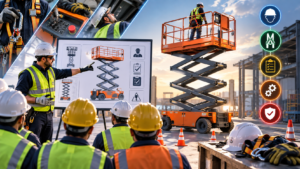
- Worker safety has moved from a compliance checkbox to a top priority, requiring smarter, safer lifting gear.
- The push for getting things done faster means nobody has time for equipment that can’t maneuver perfectly in modern workspaces.
How Warehousing is Getting a Major Upgrade
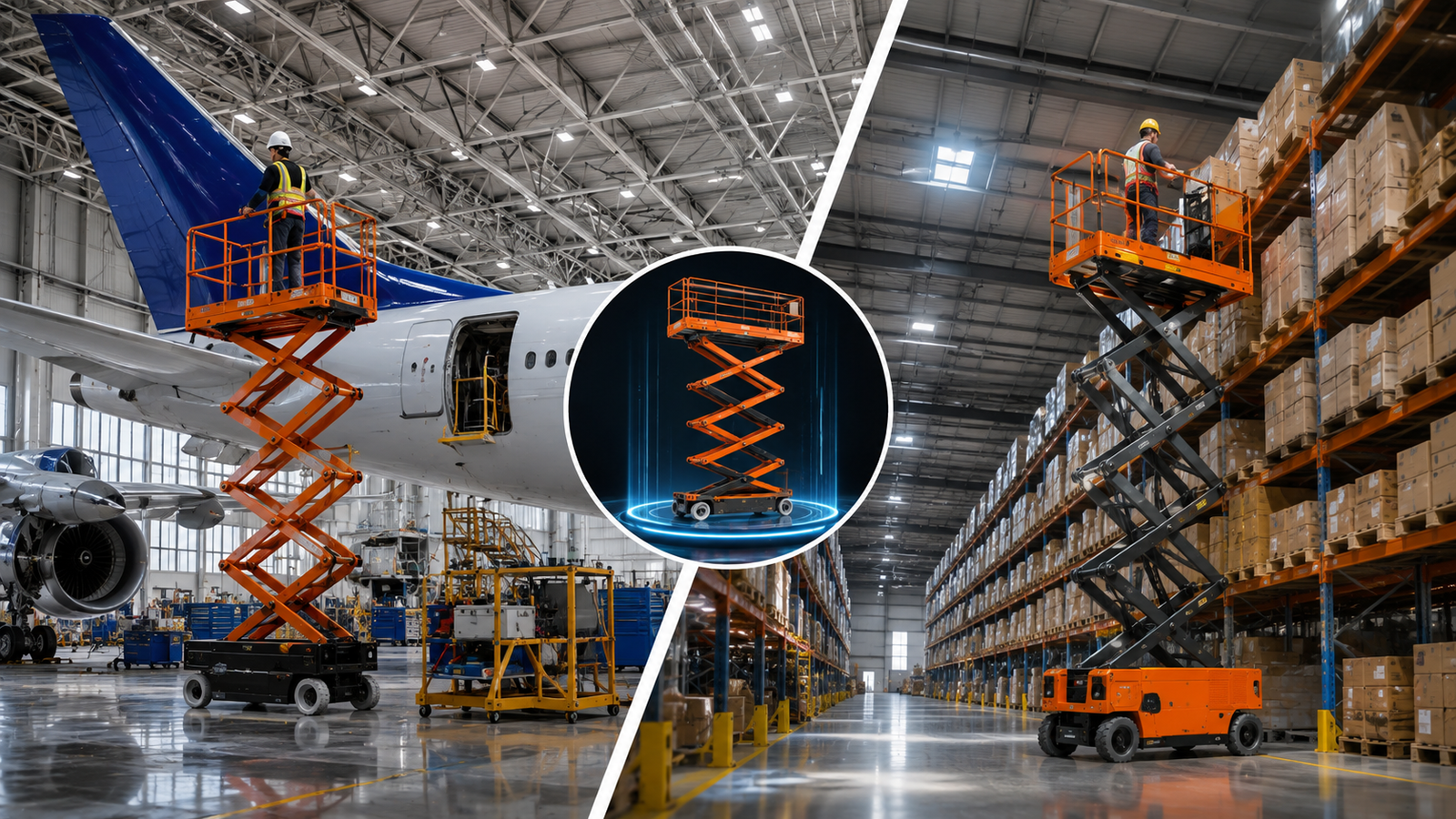
If you’ve stepped inside a modern e-commerce warehouse lately, you know it feels more like a giant, high-speed puzzle than a traditional storage unit. It’s not just about stacking boxes on pallets anymore. Today’s warehouses feature insanely high ceilings and aisles so narrow you have to turn sideways just to walk down them. Getting inventory up and down from those top racks quickly—without knocking everything over—is a daily headache.
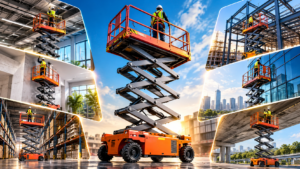
Standard lifts are often too bulky, too loud, or just too clumsy for these environments. That’s where specialized scissor lifts come in and totally steal the show. Manufacturers are building these machines specifically for the logistics world. They have ultra-compact bases that can practically turn on a dime, and they’re running on super-quiet, zero-emission electric motors. Nobody wants to breathe in exhaust fumes while counting inventory for eight hours a day. Plus, they have reinforced decks that let workers haul up heavy, awkward loads without feeling like the platform is going to tip over.
- These lifts are built to squeeze through incredibly tight warehouse aisles without scraping the storage racks.
- They pack enough heavy-duty lifting power to safely handle massive pallets of goods without getting wobbly.
- Electric models keep the indoor air totally clean and cut down on warehouse noise pollution.
The High-Stakes World of Aerospace Maintenance
Now, let’s talk about aerospace. This is an entirely different beast. We aren’t just moving boxes here; we are talking about mechanics working on multimillion-dollar aircraft. In an aerospace hangar, a clumsy piece of equipment isn’t just an annoyance—it’s a massive liability. Imagine accidentally bumping a heavy steel platform into the side of a jet’s delicate fuselage. The repair bill alone would make your eyes water, not to mention the safety risks involved.
Because the stakes are so high, aerospace crews are completely abandoning standard equipment in favor of specialized scissor lifts. These aren’t your average construction site lifts. They feature hydraulic systems that are so smooth and precise, you can inch them forward a fraction of an inch at a time.
Many of these lifts actually have custom-shaped platforms. Instead of a standard square box, the deck curves to match the shape of an airplane wing or the side of the fuselage. This lets mechanics get right up against the aircraft without leaning over awkwardly. Throw in some high-tech proximity sensors that stop the machine before it bumps into anything, and it’s easy to see why the aviation industry is hooked.
- Ultra-smooth hydraulic controls let mechanics inch right up to a plane’s surface without jerky movements.
- The weight capacities are beefed up so multiple technicians can ride up together with heavy diagnostic tools.
- Built-in anti-collision sensors act like a digital safety net, stopping the lift instantly before it hits the aircraft.
Under the Hood: What Makes These Lifts Tick
To really get why specialized scissor lifts are outperforming the old models, you have to look at what’s actually under the hood. As we often break down on scissorlifts.org, a lift is only as good as its weakest part.
First, look at the base chassis. Instead of standard metal, these specialized machines are using high-strength steel alloys or reinforced aluminum. They’re heavy enough to stay planted on the ground but light enough not to ruin expensive indoor flooring. Then you have the scissor mechanism itself. The crisscross arms on these advanced models are engineered to handle the intense pressure of upgraded hydraulic systems.
Speaking of hydraulics, the pumps and valves on these units are top-tier. They don’t just push fluid; they modulate it. That’s what gives the operator that butter-smooth ride up to 40 feet in the air. Finally, the control systems are basically computers now. Operators get sensitive, intuitive joysticks rather than clunky levers.
- The chassis and base frames use premium materials to keep the machine perfectly balanced without being overly bulky.
- Upgraded hydraulic pumps and cylinders ensure that the platform goes up and down without any scary jolts or sudden drops.
- Modern control panels feel more like flying a drone, complete with auto-braking and smart tilt sensors to keep the operator safe.
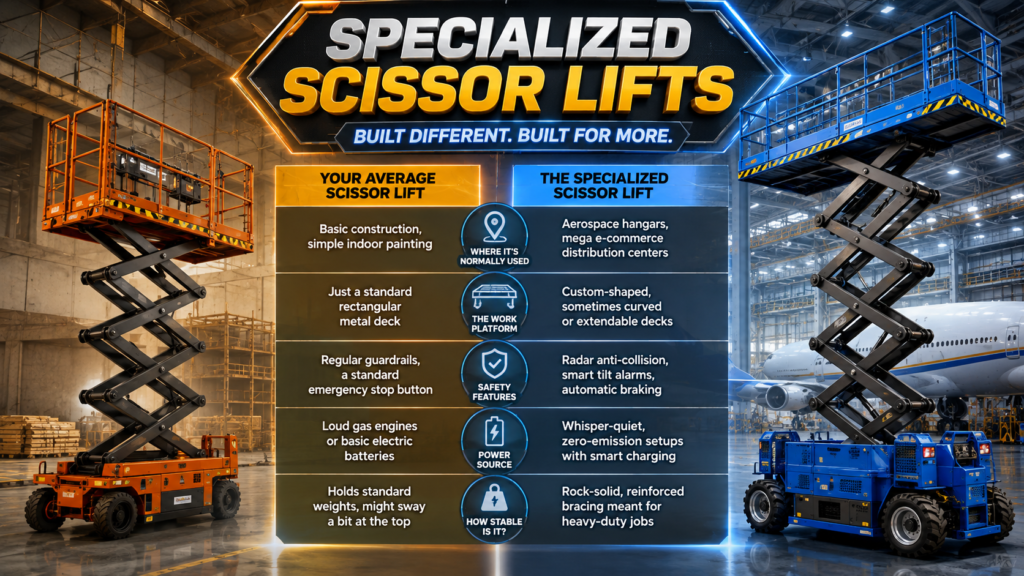
Table: Specialized Scissor Lifts
| What We’re Looking At | Your Average Scissor Lift | The Specialized Scissor Lift |
| Where it’s normally used | Basic construction, simple indoor painting | Aerospace hangars, mega e-commerce distribution centers |
| The Work Platform | Just a standard rectangular metal deck | Custom-shaped, sometimes curved or extendable decks |
| Safety Features | Regular guardrails, a standard emergency stop button | Radar anti-collision, smart tilt alarms, automatic braking |
| Power Source | Loud gas engines or basic electric batteries | Whisper-quiet, zero-emission setups with smart charging |
| How stable is it? | Holds standard weights, might sway a bit at the top | Rock-solid, reinforced bracing meant for heavy-duty jobs |
The Money Talk: Why the Investment Makes Sense
Let’s get down to brass tacks. Equipment costs money, and upgrading an entire fleet isn’t exactly cheap. So why are CFOs and facility managers eagerly signing off on these specialized scissor lifts? Because in the real world, cheap equipment ends up costing you a fortune.
When you buy a specialized lift, you’re buying durability. The parts don’t wear out nearly as fast as the cheap stuff, which means your maintenance team isn’t constantly fixing broken hoses or dead batteries. That practically eliminates expensive downtime.
But the biggest financial win actually comes from safety. Workplace accidents are tragic, and from a business standpoint, they are incredibly expensive. Between workers’ comp, liability payouts, and sky-high insurance premiums, a single accident can wreck a quarterly budget. Specialized lifts have so many fail-safes built in that they drastically cut down on these incidents. When your crew is safe, your machines are running, and the job gets done faster, that initial price tag pays for itself pretty fast.
- You save a ton of money on repairs and downtime because premium parts simply don’t break as often.
- Having high-tech safety features on site can actually help you negotiate lower insurance premiums for your facility.
- Crews get their tasks done noticeably faster when they aren’t fighting with clunky, outdated machinery.
FAQs About Specialized Scissor Lifts
What exactly is a scissor lift?
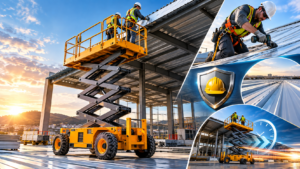
Think of it as a motorized scaffold. It’s a mobile platform sitting on top of crisscrossing metal supports (that look like a bunch of scissors stacked together). When the engine pumps hydraulic fluid, those supports squeeze together and push the platform straight up into the air.
What do aerospace and warehouse guys actually use them for?
Warehouse crews use them all day long to manage inventory on crazy-high storage racks and fix overhead lights or sprinkler systems. Aerospace mechanics use them to safely get up to an airplane’s wings, tail, or fuselage for painting, inspections, and repairs without needing permanent scaffolding.
How much weight can these things actually hold?
It varies a lot by model. A small, skinny lift meant for narrow warehouse aisles might hold around 500 pounds (basically one person and some boxes). But the massive, specialized aerospace lifts? Those beasts can easily lift 1,500 to 2,000 pounds, allowing three mechanics and a bunch of heavy tools to ride up together.
How high up can they go?
Your standard run-of-the-mill scissor lift tops out around 20 to 40 feet. But specialized models built for giant logistics hubs or massive aircraft hangars can push way past that, easily reaching 50 to 60 feet in the air safely.
Are they safe to use? What should I watch out for?
They are incredibly safe if you use your head. The big rules are: never overload the platform past its weight limit, only drive them on flat, hard ground, watch out for overhead stuff (like power lines or airplane wings), and always clip in with a safety harness if your site requires it.
Do they break down a lot? How do I maintain them?
They are super reliable if you take care of them. The secret is doing a quick visual check every morning before using it. Look for puddles of hydraulic fluid, make sure the battery connections aren’t corroded, and keep the scissor joints greased up based on what the manual says.
Which type should I actually buy?
It depends entirely on your building. If you are indoors in a warehouse, you absolutely want a zero-emission electric scissor lift. If you work in an aerospace hangar, look into the highly customized hydraulic lifts that have contoured platforms designed specifically for aircraft maintenance.
Wrapping It Up – Specialized Scissor Lifts
The fact that massive industries like aerospace and warehousing are overhauling their equipment fleets tells us something really important: you can’t fake quality. When the supply chain is moving this fast, and aircraft engineering is this insanely complex, you need machinery that actually keeps up.
Specialized scissor lifts have proven they are worth their weight in gold. They give workers the heavy-duty lifting muscle they need, combined with the delicate touch required for high-stakes environments.
Here at scissorlifts.org, our whole goal is to help you figure out exactly which machine is going to solve your specific headaches. Because at the end of the day, upgrading your gear isn’t just about buying a new toy—it’s about keeping your crew safe, speeding up your workday, and making sure your business is ready for whatever comes next.
- Companies that use specialized gear have a massive edge because they simply work faster and safer than the competition.
- Lifting technology is getting smarter every year, especially when it comes to battery life and anti-collision tech.
- Don’t guess when buying equipment—rely on trusted hubs like scissorlifts.org to figure out exactly what your facility needs.