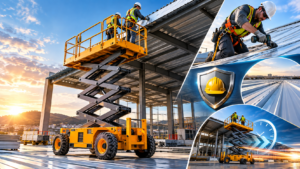
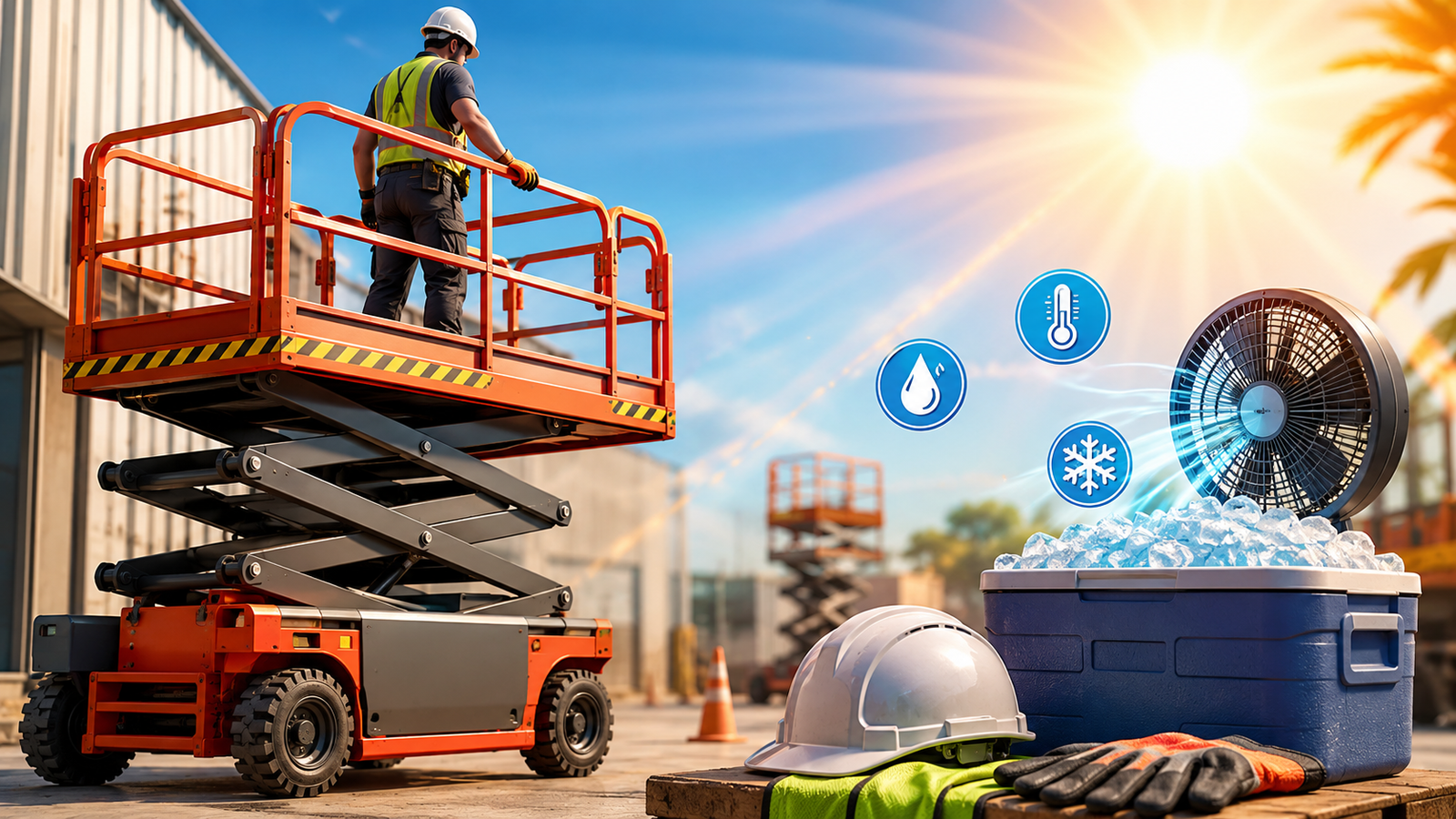
Stay cool on the job! Our summer guide on Scissor Lift Heat Safety offers vital tips for operators
Summer on a job site hits different. The days are longer, the weather is predictable, and it’s generally the best time of year to knock out big construction, maintenance, or event production projects. But let’s be honest—that midday sun can be absolutely brutal. Hence, it is mandatory to have a head’s up on the Scissor lift heat safety precautions.
When you’re operating a scissor lift, you aren’t just dealing with the normal ground-level heat. You’re hoisted 30 or 40 feet in the air, baking on a metal platform with zero shade, while the sun beats down from above and reflects off the pavement below. Because of this, taking scissor lift heat safety seriously isn’t just a corporate suggestion; it’s a matter of survival for both your crew and your equipment.
When temperatures spike, both human bodies and heavy machinery are pushed to their absolute limits. Here at Scissorlifts.org, we want to make sure your summer projects go off without a hitch. Let’s break down the real-world strategies, essential equipment checks, and cooling tricks you need to beat the heat this season.
Understanding the Real-World Basics of Scissor Lift Heat Safety
When we talk about staying safe in the heat, we’re looking at a two-front battle. First, you have the operator. Up in the basket, the air is stagnant, and you’re completely exposed to UV rays. It doesn’t take long for the heat to drain your energy, slow down your reaction time, and mess with your head.
A split-second lapse in judgment while maneuvering a lift near power lines or tight structural beams can end in disaster. On the flip side, you have the machine itself. Your lift is essentially a giant heat sink. The hydraulic systems, electrical boards, and battery packs all despise extreme temperatures.
When you combine the ambient summer heat with the heat generated by the machine working hard, things can go sideways quickly. Making sure you have a solid plan for scissor lift heat safety means looking out for the person in the basket and the metal beneath their boots.
- Walk the site with heat in mind: Before anyone goes up, look around. Are you working next to a highly reflective glass building? Is the ground fresh black asphalt? Identify these “heat traps” early so your operators know what they’re walking into.
- Don’t just check the temperature, check the humidity: A 90-degree day in dry heat is completely different from a 90-degree day with 80% humidity. When it’s humid, sweat doesn’t evaporate, meaning your body can’t cool itself down. Keep an eye on local heat advisories every single morning.
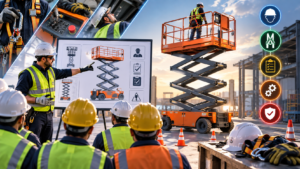
- Make it the first thing you talk about: Bring up heat safety in your morning toolbox talks every day during the summer. Remind the crew what the danger signs look like and make sure everyone knows nobody gets penalized for needing a water break.
Daily Equipment Checks (Because Summer Is Brutal on Machines)
You can’t expect your equipment to run perfectly in 100-degree weather if you aren’t giving it a little extra TLC. Summer equipment maintenance is a whole different beast compared to the rest of the year. The biggest enemy here is fluid degradation. When things get incredibly hot, hydraulic oil loses its thickness (viscosity).
Thin oil means your lift is going to feel sluggish, it might struggle to reach its maximum height, and you run a high risk of blowing out seals. And if you’re running an electric rig? Heat is a battery killer.
It causes the water inside lead-acid batteries to evaporate at a crazy rate, which can ruin the cells permanently if they run dry. If you want to keep your fleet running smoothly and maintain optimal scissor lift heat safety, your morning inspections need to be thorough and unforgiving.
- Keep a close eye on the hydraulics: Check your fluid levels before the machine even turns on. If the hydraulic oil smells burnt or looks cloudy, drain and replace it immediately before it causes a major system failure.
- Baby those batteries: For electric scissor lifts, pop the caps on the batteries weekly (or even every few days in a heatwave). Top them off with distilled water, but only after a full charge. Clean off any nasty corrosion on the terminals.
- Clear out the breathing room: Your lift has cooling fans and vents for a reason. Get in there and blow out the dust, dirt, and debris. If the motor can’t breathe, it’s going to overheat and shut down on you right in the middle of a job.
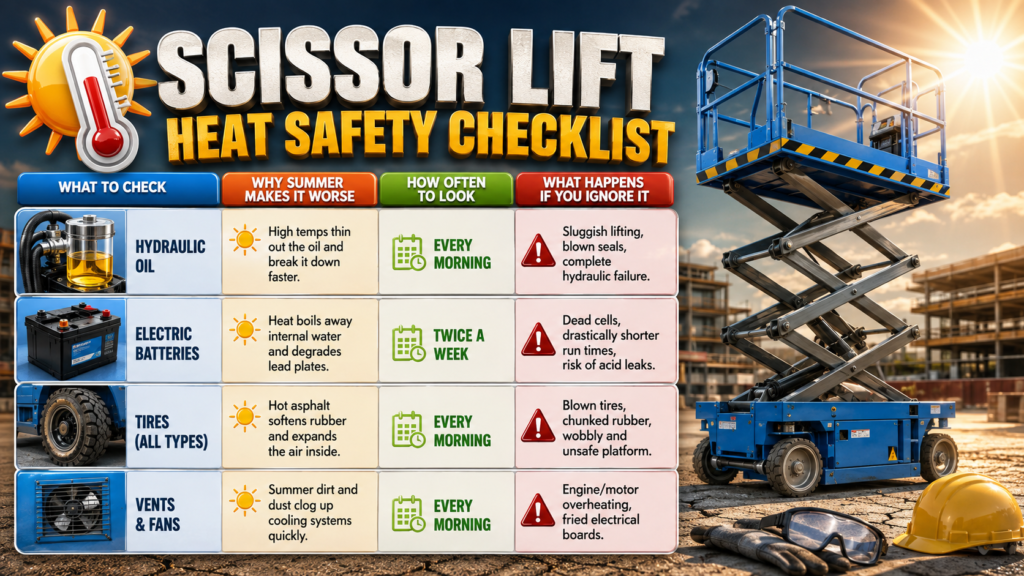
Table: Scissor Lift Heat Safety Checklist
| What to Check | Why Summer Makes It Worse | How Often to Look | What Happens If You Ignore It |
| Hydraulic Oil | High temps thin out the oil and break it down faster. | Every morning | Sluggish lifting, blown seals, complete hydraulic failure. |
| Electric Batteries | Heat boils away internal water and degrades lead plates. | Twice a week | Dead cells, drastically shorter run times, risk of acid leaks. |
| Tires (All Types) | Hot asphalt softens rubber and expands the air inside. | Every morning | Blown tires, chunked rubber, wobbly and unsafe platform. |
| Vents & Fans | Summer dirt and dust clog up cooling systems quickly. | Every morning | Engine/motor overheating, fried electrical boards. |
Keeping Operators Cool: Practical Tips That Actually Work
Taking care of the machine is great, but the person operating the controls is the most important asset on the site. Working elevated jobs in July or August will drain the life out of you if you aren’t proactive.
We’ve all seen guys try to tough it out, and it never ends well. Providing actionable cooling tips for operators isn’t about coddling anyone; it’s about keeping their minds sharp and their hands steady.
The biggest rule? Do not wait until you are thirsty to drink water. If you feel thirsty, you’re already behind the eight ball and dehydrating. Beyond water, what you wear makes a massive difference. Ditch the heavy, dark-colored cotton t-shirts that hold onto sweat and heat. You want gear that breathes and actively pulls heat away from your body.
- Force the water issue: Operators need to be downing at least a cup of water or a good electrolyte drink every 15 to 20 minutes. Keep a cooler stocked right at the base of the lift so they don’t have to walk across the site to find it.
- Upgrade the workwear: Encourage the crew to wear lightweight, moisture-wicking long sleeves. They keep the sun off your skin without trapping the heat. A cooling neck gaiter soaked in ice water is an absolute game-changer on a hot afternoon.
- Bring the breeze with you: You can easily mount a rugged, battery-powered fan to the platform rails. It sounds small, but having a constant breeze moving across your face when the air is otherwise dead makes a massive difference for operator comfort.
Spotting the Danger Signs: When the Heat Becomes Too Much
Even with the best preparation, the heat can still catch up to you. A huge part of scissor lift heat safety is knowing exactly what to look for when a worker’s body starts to redline. Heat stress sneaks up fast, and it generally hits in stages. It starts with muscle cramps, moves into heat exhaustion, and if ignored, turns into full-blown heat stroke—which is a deadly medical emergency.
When you’re 30 feet in the air, feeling dizzy or getting blurry vision is incredibly dangerous. Preventing heat exhaustion on aerial lifts requires everyone on the ground to watch the folks in the air, and vice versa. Use the buddy system. If a worker looks flushed, seems confused, or is suddenly struggling with the controls, you need to get them down to the ground immediately.
- Know what heat exhaustion looks like: Watch for guys who are sweating buckets, look incredibly pale, complain of nausea, or seem unusually weak. That’s their body screaming for a break and some shade.
- Recognize the terror of heat stroke: If someone suddenly stops sweating and their skin is hot, red, and dry, you are out of time. If they are confused, slurring words, or passing out, call 911 immediately. This is not a “drink some water and walk it off” situation.
- Have a rapid response plan ready: If an operator shows signs of heat stress, get the lift lowered safely and quickly. Get them into the AC (like a running truck), loosen their safety harness and boots, and get ice packs on their neck and armpits.
Beating the Clock: Smart Scheduling for Hot Days
Sometimes, the best way to deal with the heat is simply to avoid the worst of it. The sun is usually at its most punishing between 10:00 AM and 4:00 PM. If you force your crew to do the heaviest, most exposed aerial work during those hours, you are fighting a losing battle against the weather.
Smart site managers know how to play the clock to ensure scissor lift heat safety. This means looking at your project timeline and figuring out how to shift the heavy lifting to the cooler parts of the day.
Furthermore, you have to look out for the new guys. A guy who just started on Tuesday isn’t used to the heat yet. You have to ease them into it, letting their bodies acclimatize over a week or two.
- Flip your working hours: If the local noise ordinances allow for it, start your shifts at 5:00 AM or push the work into the evening. Knock out the high-elevation, unshaded tasks when the sun is low.
- Mandate your shade breaks: Don’t leave it up to the operators. Set a schedule where every hour, the lift comes down and the operator spends 10 minutes in a designated, shaded cooling station.
- Ease the rookies in: Implement an acclimatization schedule for new hires. Let them work in the heat for just a few hours on day one, and gradually build up their exposure over a couple of weeks so their bodies can adapt safely.
Dealing with Scorching Asphalt and Dusty Dirt Lots
People always look up at the sun when they think about the heat, but they forget about the ground right under their tires. Hot pavement is a silent killer for heavy machinery. In the middle of July, black asphalt can easily reach 140 degrees or more.
That heat radiates straight up into the underbelly of your scissor lift, and more importantly, it literally cooks your tires. If you are using non-marking tires or standard solid rubber, that heat makes the rubber soft and spongy.
Driving aggressively on soft rubber leads to chunks tearing off, which destroys the stability of your lift. And if you’re using rough-terrain lifts on a dirt site? The heat bakes the moisture out of the ground, creating massive dust clouds that get sucked right into your engine intakes.
- Check tires for heat damage: Look at the tires a few times a day. If you see blistering, cracking, or if the rubber feels unusually soft, you need to get the machine off the hot pavement before a blowout happens.
- Take it easy on the steering: Tell your operators to stop turning the wheels sharply while the machine is sitting still on hot asphalt. Steer while moving slowly to prevent the soft rubber from gripping the road and tearing off in chunks.
- Water down the dirt: If you’re working on a dusty, unpaved lot, get a water truck out there. Keeping the dust down stops abrasive dirt from clogging up your lift’s air filters and cooling fans, preventing nasty overheating issues.
FAQs on Scissor Lift Heat Safety
What temperature is too hot to operate a scissor lift?
Honestly, there isn’t a hard-and-fast number from most manufacturers, but the rule of thumb is to go on high alert once the heat index hits 90°F (32°C). At that point, you need to implement strict scissor lift heat safety rules, mandate water breaks, and watch your hydraulic systems closely.
Can I leave my electric scissor lift charging in the sun?
Absolutely not. Combining the heat generated by the battery charger with direct, blazing sunlight is a recipe for disaster. It can cause the battery acid to boil, ruin the cells, or even create a fire hazard. Always park and charge your lifts in the shade or indoors.
How do I prevent heat exhaustion while operating an aerial lift?
It boils down to three things: hydrate relentlessly (even when you aren’t thirsty), wear breathable, light-colored clothing, and take regular breaks out of the sun. Keeping a portable fan on the platform also works wonders for operator comfort.
Does hot weather actually mess with a scissor lift’s lifting capacity?
The max weight limit doesn’t magically change, but the heat absolutely affects how the machine lifts. High temperatures thin out hydraulic oil. When managing hydraulic fluid temperature in summer, know that thin oil makes the lift slow down, feel spongy, and struggle to reach max height efficiently.
What should I do if the metal lift controls become too hot to touch?
Metal bakes in the sun. If the controls or guardrails are burning your hands, throw on a pair of lightweight, breathable mechanic’s gloves. Also, when you park the lift for lunch, drape a light-colored towel over the control panel so it isn’t scorching when you get back.
Are rough terrain scissor lifts better for working in the summer heat?
Generally, yes. Rough terrain models usually have heavier-duty cooling systems and beefier tires meant for abuse. However, aerial work platform safety rules still apply—you still have to check the engine coolant and blow the dust out of the radiators daily to keep them running right.
Where can I find the official rules for working safely in the summer heat?
OSHA is your best friend here. They have strict OSHA heat safety guidelines and even offer a free Heat Safety Tool app for your phone. It calculates the heat index at your exact location and tells you exactly what precautions your crew needs to be taking that day.
Scissor lift heat safety