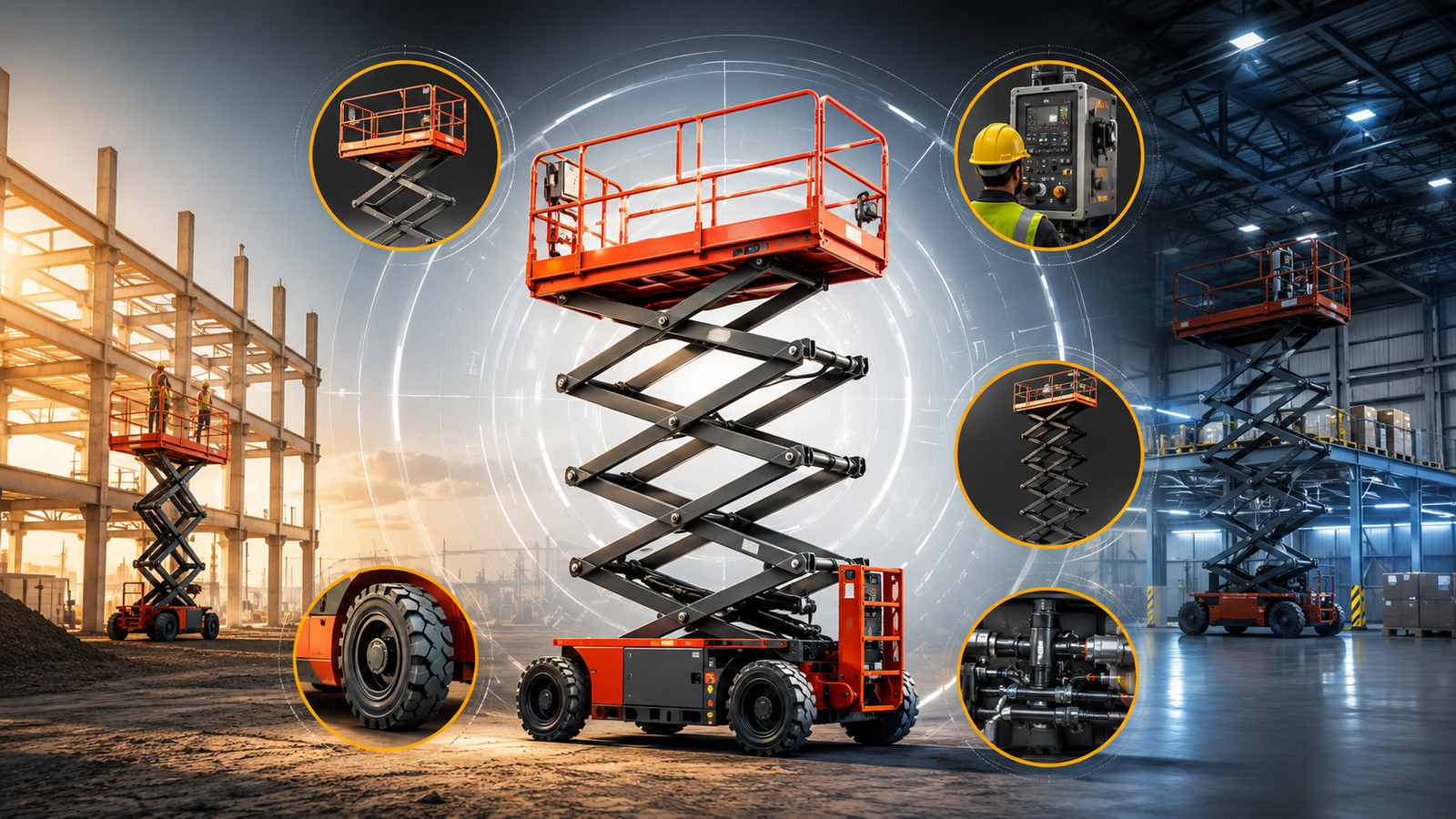
5 Key Factors to Consider When Choosing the Right Scissor Lift in 2026
The equipment you choose for your facility, building site or warehouse is a major factor in the success and safety of your day-to-day operations. As technology and safety laws change, fleet managers and contractors need to be flexible in their procurement strategy to remain ahead of the game by choosing the right scissor lift according to the trends and technology.
You should constantly seek to strike a fine balance between maximising operational uptime, enforcing stringent staff safety and preserving financial effectiveness. The contemporary equipment market is complex and needs detailed knowledge of the many specifications of machines, changing compliance requirements and long-term maintenance to grasp.
Whether you’re dealing with rough outside terrain, stringent interior emission rules or just attempting to determine whether it’s time to update an outdated machine in your fleet, making the appropriate scissor lift choice in 2026 requires a very smart strategy. Matching your exact workplace demands against the newest offers from manufacturers may help you lock in equipment that will immediately improve production and safeguard your bottom line.
Top 5 Key Factors to Consider When Choosing the Right Scissor Lift in 2026
1. Your Operating Environment and Terrain Specifications
The physical environment in which the equipment will function is one of the most basic aspects in selecting the proper scissor lift in 2026. Scissor lifts are not one-size-fits-all machines. Putting an indoor unit on rough outdoor terrain is asking for catastrophic failure. Scissor lifts are built for flat concrete and smooth floors inside.
They are easy to handle in warehouses and malls but have extremely limited gradeability, often below 25%. In contrast, Rough Terrain (RT) scissor lifts are the “SUVs” of the lifting world. Equipped with four-wheel drive, high ground clearance, heavy-duty foam-filled tires, and an incredible 30% to 50% gradeability, these lifts can tackle mud, gravel, and uneven building sites with ease.
High-end mobility solutions such as bi-leveling crawler scissor lifts are equipped with dynamic self-leveling chassis to move in muck, steep slopes and sensitive grass for severe slopes. Operators also need to observe the “20-Degree Rule.” Specialty crawlers can operate on steep inclines, but wheeled variants need the ground to be leveled to within 1 to 5 degrees using hydraulic outriggers before the platform can be raised.
- Identify whether your main terrain is smooth inside concrete floor, rough outside gravel or ultra-sensitive sloping surfaces that need specialist tracks.
- Make careful you verify the gradeability standards of your workplace to ensure the lift can safely navigate slopes without the risk of tipping.
- If you operate on difficult outside landscaping jobs or on sloping tunneling jobs often, be sure you need a dynamic self-leveling chassis or hydraulic outriggers.
2. Electric Vs Gas – What’s the Best Power Source?
Choosing the correct scissor lift in 2026 will be a big deal, particularly when environmental rules and operating costs change. One of the key decisions will be whether to go with electric or internal combustion engines. Electric scissor lifts are quite popular for indoor retail and manufacturing facilities since they are silent and do not emit dangerous exhaust pollutants, making them well-suited for places without natural ventilation.
In terms of cost, electric versions are quite efficient, requiring just around $3 to $5 for a full charge, which will last through the average day. In contrast, diesel and gas scissor lifts remain the clear champions for heavy-duty outdoor construction. These rugged machines have enhanced power output and all-terrain capability and may therefore perform at their best on hilly, sandy or rocky terrains.
Gas-powered lifts also tend to have a significantly larger weight capacity than normal electric ones that max out at between 500 and 1,500 pounds, vs 1,500 to 2,500 pounds for gas-powered lifts. You will need to balance these performance capabilities carefully against the rigorous local environmental rules that are progressively restricting the usage of gas-powered equipment inside.
- Review your interior ventilation and local environmental restrictions. Gas-powered equipment emit pollutants that may breach indoor health and safety requirements.
- Compare the energy costs over time: Electricity costs $3 to $5 per day to operate, against a much higher $15 to $20 daily fuel use for gas.
- Think about your maximum load needs. Gas versions often have a substantially higher weight capacity, so they can take on large amounts of building materials.
3. Assessing the Financial Impact: Total Cost of Ownership and the Choice to Repair or Replace
Running a fleet demands smart financial planning and finding the best scissor lift in 2026 means going beyond the initial purchase price or leasing cost. Fleet managers are constantly faced with the problem of whether to fix an aged lift or to purchase a whole new unit.
Industry pros use the objective “classic 50% Rule” to guide this decision: if the projected cost of an impending repair comes to more than 50 percent of the machine’s existing resale value, then replacement is statistically the better financial alternative.
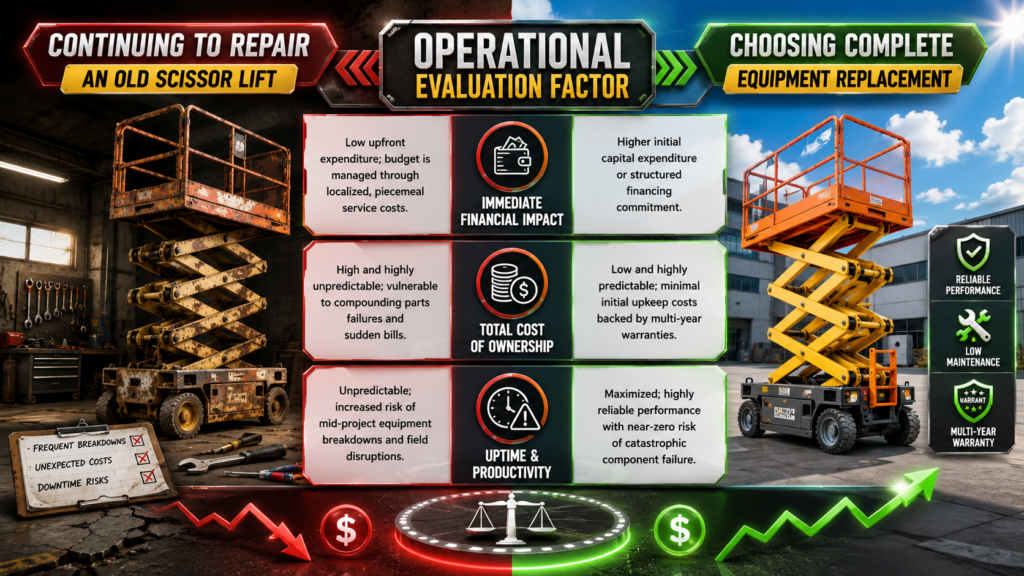
High and unexpected total cost of ownership driven by compounding parts failures, abrupt hydraulic bills and severe structural deterioration. This leads to mid-project breakdowns and lost production if your machine is suffering from repeated electrical system failures or uneven weight distribution due to bent and misaligned scissor arms. By purchasing new equipment, you’ll get long-term warranties, reduced short-term maintenance expenses and guaranteed maximum uptime for your essential field activities.
Cost Comparison: Repair a Scissor Lift or Buy a New One
While choosing the right right scissor lift in 2026, consider the below factors:
| Operational Evaluation Factor | Continuing to Repair an Old Scissor Lift | Choosing Complete Equipment Replacement |
| Immediate Financial Impact | Low upfront expenditure; budget is managed through localized, piecemeal service costs. | Higher initial capital expenditure or structured financing commitment. |
| Total Cost of Ownership | High and highly unpredictable; vulnerable to compounding parts failures and sudden bills. | Low and highly predictable; minimal initial upkeep costs backed by multi-year warranties. |
| Uptime & Productivity | Unpredictable; increased risk of mid-project equipment breakdowns and field disruptions. | Maximized; highly reliable performance with near-zero risk of catastrophic component failure. |
- Use the standard 50% rule to decide objectively if an old lift that is giving trouble should be replaced rather than being kept going at the cost of piecemeal maintenance expenditures.
- Check your current fleet for potentially damaging structural distortions, such as scissor arms that become misaligned and bind while raising and lowering the platform.
- Estimate the cost risk of operational downtime from mid-project equipment failures if sticking with unstable outdated equipment.
4. Meeting Evolving Safety Standards and OSHA Compliance
Work safety is not in question. Safety rules for aerial work platforms are continuously amended, based on fresh engineering data and accident prevention data. If you’re purchasing a scissor lift in 2026, you’ll want to ensure the equipment you buy conforms to the current ANSI A92 standards and OSHA requirements.
Today’s aerial platforms are factory-equipped with a range of modern safety systems intended to take the human out of the equation. These include automated pothole prevention systems that immediately steady the chassis when the platform is lifted and extremely precise load sensing systems that automatically prohibit additional lifting actions once the platform exceeds its weight limit.
Additionally, innovative tilt-cutout sensors and pitch alarms provide vital warnings before a harmful operation angle is achieved on a sloping floor. Beyond the apparatus itself, companies are strictly responsible to ensure that every operator is properly taught and certified by a competent person which requires required recertification every three years or prompt retraining if dangerous operation is detected.
- Seek for potential models with factory-installed load-sensing devices, which immediately shut machine functioning when the set weight limit has been exceeded.
- Make sure that the lift includes automatic pothole prevention gates that dynamically stabilize the chassis and prevent tilting as soon as the platform is raised.
- Ensure your equipment is up to date with the current ANSI A92 design requirements to be fully compliant. This will make your required OSHA compliance and operator certification programs much easier to implement.
5. Assessment of Equipment Maintenance Needs and Durability
Your heavy equipment’s lifespan plays a big impact in your return on investment, therefore maintenance forecasting is an important aspect of picking the correct scissor lift in 2026. The life expectancy and the maintenance schedule are determined solely by the power source. Properly maintained electric scissor lifts have a lifetime of 8-10 years.
This is mainly because they have fewer moving parts and are under much less mechanical strain over time. Gas-powered options, in contrast, usually endure 6 to 8 years because of the extreme vibration and heat created by internal combustion engines, particularly in rugged, high-debris outdoor locations.
No matter what kind of engine you run, you need to do comprehensive visual and mechanical checks to avoid catastrophic breakdowns. Technicians should aggressively look for harmful metal pitting and rust buildup at important scissor pins, pivot points and load-bearing welds.
Additionally, the hydraulic system supplies the required power to lift the platform, requiring comprehensive quality checks on the hydraulic fluid to provide a smooth and regulated ride and to avoid any sudden loss of pressure.
- Buy for the long haul by varying lifespans in your fleet purchases. Electric models often last two to three years longer than gas-powered vehicles.
- Perform regular, detailed visual inspections for harmful rust, metal pitting and corrosion at important pivot points and load bearing welds.
- Ensure a constant, regulated platform ascension without harmful mid-air mechanical stuttering by maintaining thorough hydraulic fluid quality and pressure checks.
FAQs: Choosing the Right Scissor Lift in 2026
How long does a scissor lift typically last?
An electric scissor lift has fewer moving components and less mechanical stress to worry about, allowing it to last 8-10 years with good maintenance. Generally, gas scissor lifts will last between 6 and 8 years. Environmental variables are huge also; equipment utilized outside, in heavy debris or chemically corrosive conditions, are going to naturally decay far quicker than machines that are used infrequently on smooth inside surfaces.
Is OSHA certification required to operate a scissor lift?
Yes, OSHA mandates that all personnel be trained and certified by an authorized person before operating a scissor lift. The certification includes danger detection, pre-shift checks and safe navigation. Operators must also be officially re-evaluated or re-certified at least every 3 years or retrained promptly if found to be operating the lift unsafely.
Are Electric Scissor Lifts Safe To Use In Wet Conditions?
In general, electric scissor lifts may be moved about in mild rain, but they are certainly not suggested for heavy rain or standing water settings. The electrical components must be strictly protected to avoid short circuits and irreparable damage to the battery. If you operate often in heavy, damp outdoor situations, a gas-powered rough terrain lift is the far safer and more dependable choice.
How long does it usually take to charge an electric scissor lift?
Most electric scissor lifts take 6 to 8 hours to fully charge with normal charging equipment. This usually provides a full day’s work. Some contemporary machines include a fast-charge option that may shorten the charging time to 3-4 hours. But if the fast-charge option is used too often, it might ultimately shorten lifetime and the efficiency of the battery packs.
How much does it cost to charge an electric scissor lift vs gas fuel?
The cost to operate an electric scissor lift for daily interior use is quite affordable, around $3 to $5 on one full battery charge depending upon the local electricity rate. In a sharp contrast, it might cost $15 to $20 a day for fuel for gas or diesel lifts. Electric versions save a lot of money in energy, but gas models are still needed for fast-paced, heavy-duty outside work.
What is the classic 50% rule for scissor lift replacement?
The “classic 50% Rule” is a fleet manager’s objective financial assessment tool to determine whether to repair or replace equipment. If the predicted cost of a future mechanical repair is more than 50% of the present resale value of the machine then it is financially a better decision to buy a new one rather than incur the accumulated, unpredictable expenses of breakdowns.
Are harnesses usually necessary for fall safety on a scissor lift?
According to scaffolding rules, a scissor lift often does not need a harness and personal fall arrest system (PFAS) since the factory-installed guardrails are the main fall protection. However, if the manufacturer’s operating manual requires it, or if the guardrails are temporarily removed or are inadequate for the job, a harness must be worn.
Choosing the Right Scissor Lift in 2026 for Better Outcome
There are several factors to consider when choosing the perfect scissor lift in 2026, from the topography of your workplace to the power supply demands to budget constraints and safety compliance standards. Understanding the difference between slab and rough terrain models, the economic effectiveness of electric against the brute force of gas, and following tight OSHA rules can help you manage your fleet for optimal output.
Always use objective financial indicators like the 50% rule to keep from pouring resources into a failing machine. And always engage in proactive maintenance to prolong the life of your investment. Finally, choosing the right equipment that fits your individual needs day-to-day means a safer, more productive and ultimately more lucrative place of work for your whole team.