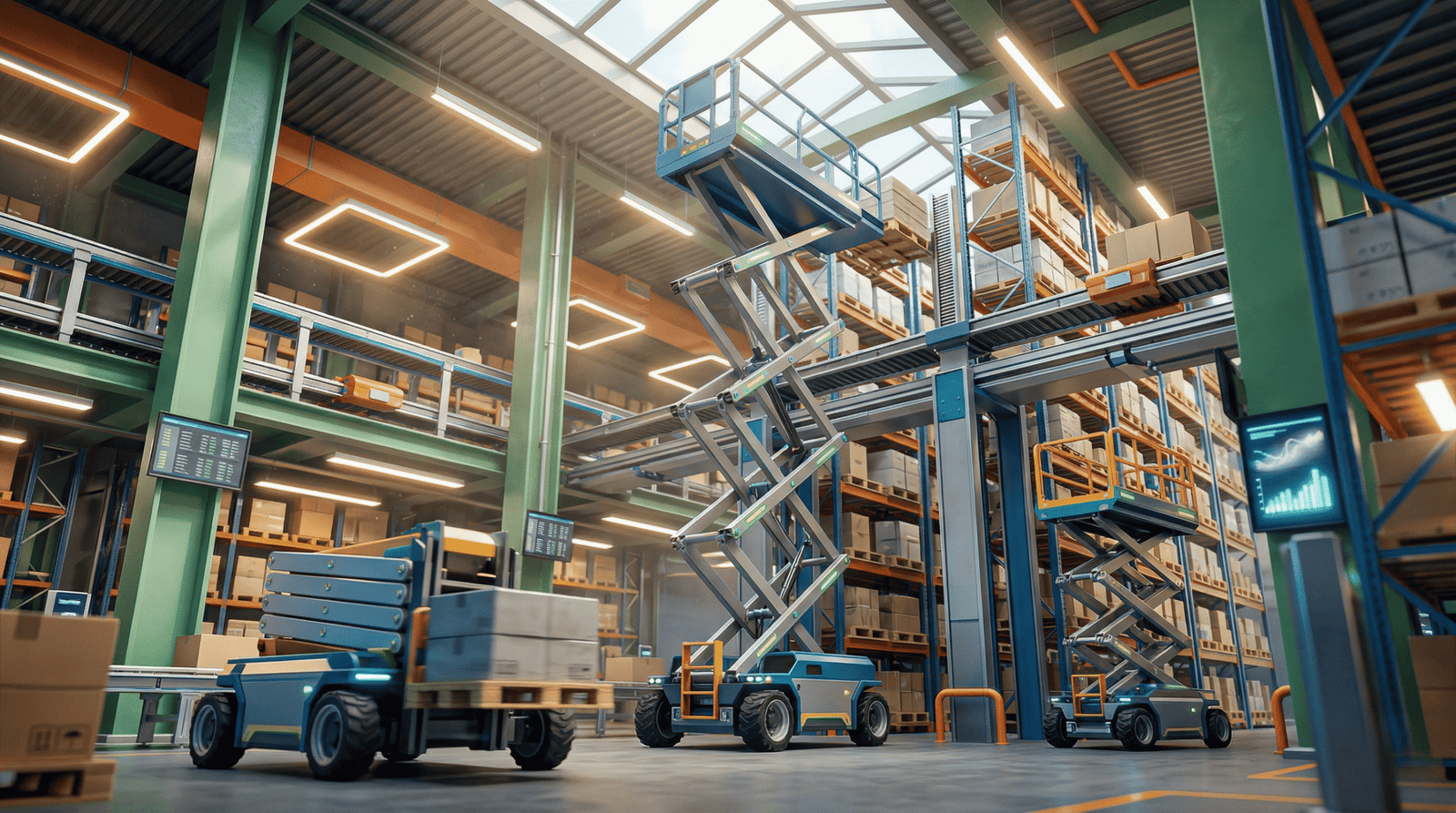
Best Scissor Lifts for Warehouses and Distribution Centers
The logistics industry is changing very quickly, and the need for warehouses and distribution centers to be more efficient has never been greater. Facility managers are using more and more specialized aerial work platforms to keep up with high-density storage and quick fulfillment cycles which includes the popular scissor lifts for warehouses and distribution centers.
The scissor lift is the best tool for vertical tasks among these. Choosing the right equipment is an important operational decision, whether it’s for routine maintenance, managing inventory in high-reach racking systems, or putting in overhead HVAC and lighting. This in-depth guide looks at the best scissor lifts for warehouses indoor and large distribution centers, taking into account their specific needs.
Understanding What Scissor Lifts Do in Logistics
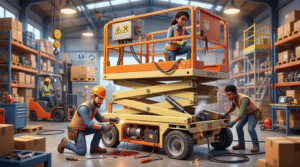
Warehouses are no longer just places to store things; they are high-tech places where every inch of vertical space is used. Scissor lifts give workers a safe way to reach these high places by giving them a stable, high-capacity platform.
These scissor lifts for warehouses have a “pantograph” mechanism, which is a series of linked, folding supports that cross each other. This mechanism extends vertically to give workers and heavy tools a lot of room to work.
- Vertical Efficiency: Access to high-tier racking may be achieved without the need of a boom lift thanks to the vertical efficiency of this system.
- Better safety: In order to lessen the amount of accidents that occur on the job, guardrails and emergency shut-off systems have been purposefully included into the design.
- Weight Capacity: The ability to hoist many operators and their tools at the same time, which speeds up the process, is referred to as the weight capacity of the machine.
The Best Electric Scissor Lifts for Use Inside
Electric scissor lifts are the best choice for most warehouses and distribution centers. Because these buildings are often closed off and not well ventilated, internal combustion engines are not a good choice because of the exhaust fumes.
Electric models run on heavy-duty rechargeable batteries, which means they don’t make any noise or pollution, which is good for workers’ health and keeps the environment clean.
- No emissions: If you want to comply with OSHA and indoor air quality regulations, you must ensure that there are no emissions.
- Quiet Operation: This feature allows the scissor lifts for warehouse to function day and night, seven days a week, without causing any disruption to the individuals who are engaged in their job.
- Non-Marking Tires: These tires often have a unique rubber coating on them that prevents them from scratching polished factory floors.
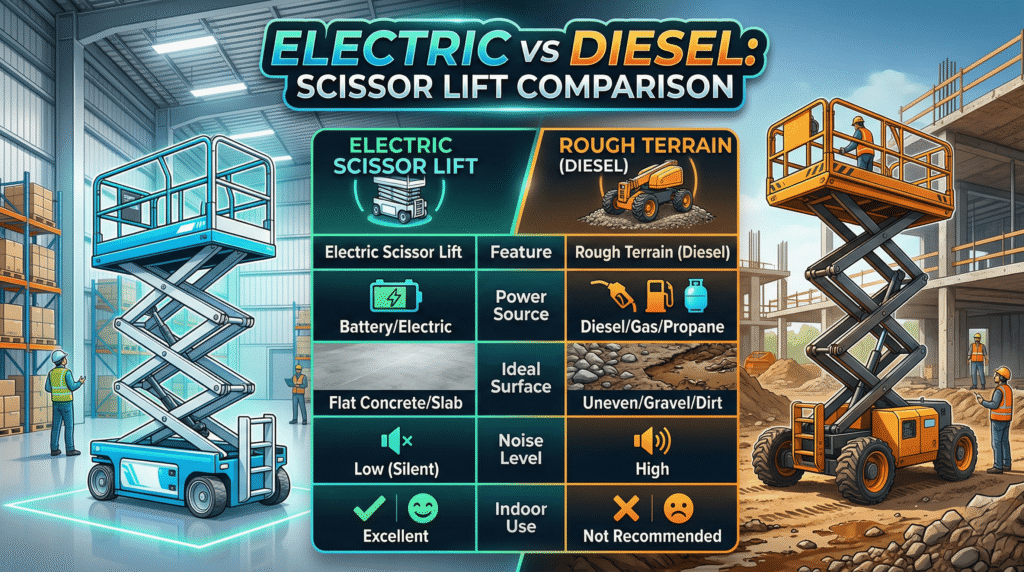
Table: Best Scissor Lifts for Warehouses Features
| Feature | Electric Scissor Lift | Rough Terrain (Diesel) |
| Power Source | Battery/Electric | Diesel/Gas/Propane |
| Ideal Surface | Flat Concrete/Slab | Uneven/Gravel/Dirt |
| Noise Level | Low (Silent) | High |
| Indoor Use | Excellent | Not Recommended |
Models with High Reach for Distribution Centers
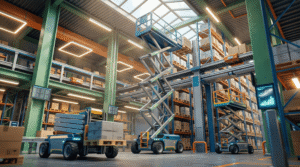
The ceilings in many distribution centers are more than 30 or 40 feet high. In these cases, standard compact lifts might not be enough. High-reach scissor lifts have reinforced steel frames that keep them stable when they are fully extended.
These models often have “slide-out” extension decks that let them reach further horizontally over things like sorting machines or conveyors.
- Extended Reach: Additionally, the Genie GS-4046 and other variants are capable of reaching operating heights of almost 46 feet.
- Platform Extensions: These extensions add between three and five feet of workspace to the rack, allowing for maintenance to be performed over the rack.
- Smart Control Systems: Newer units include dual-zone controls that guarantee your safety while you are working in close proximity to objects that are suspended from the ceiling.
Small and Micro Scissor Lifts for Tight Spaces
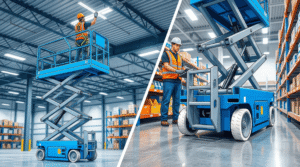
Aisles are getting narrower as warehouses move toward storing more items in less space. Standard scissor lifts for warehouses may have trouble getting through these narrow hallways. Micro scissor lifts are the answer. They have a slim chassis that can fit through standard doorways and turn corners easily in “very narrow aisle” (VNA) setups.
- Adaptability: Having the capacity to turn without moving enables for rotation in confined locations, which is referred to as maneuverability.
- Lightweight design: The design is lightweight, making it acceptable for use on mezzanine levels where there is a worry about the weight of the floor.
- Easy to move: It is simple to transfer since it is compact enough to be transported between floors using standard freight elevators.
Safety Features and Rules for Following
The main reason businesses buy scissor lifts instead of manual ones is safety. There is a high risk of collisions or falls in a busy distribution center. To lower these risks, top manufacturers use cutting-edge sensor technology.
These features are necessary for modern safety compliance. For example, tilt sensors that stop elevation on uneven ground and pothole protection systems that keep the base stable.
- Tilt Sensors: The lift height is automatically regulated if the chassis is not on a level surface. This feature is available on certain models.
- Overload Protection: Overload Protection means that the lift will not operate if the weight of the platform is more than what is considered safe.
- Emergency Lowering: A manual valve that allows operators to descend safely in the event that the power goes out is referred to as an emergency lowering valve.
Taking care of things and making the battery last longer
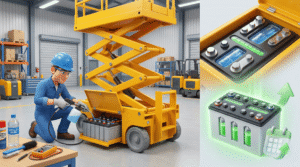
To get the most out of your warehouse equipment, you need to stick to a strict maintenance schedule. The battery is the most important part of an electric scissor lift. Newer models that use lithium-ion technology have changed the way warehouses work by allowing for faster charging cycles and longer runtimes than traditional lead-acid batteries which can be easily solved with the help of scissor lifts for warehouse.
- Daily Inspections: It is necessary to do daily inspections, which include checking the levels of hydraulic fluid and the condition of the tires before each shift.
- Watering the battery: This is essential for lead-acid batteries, since it prevents the cells from breaking down. Li-ion batteries, on the other hand, do not need this step.
- Telematics: Telematics refers to the use of digital tracking technology in order to monitor the condition of the battery and to schedule maintenance visits in advance.
Why should you get your equipment from ScissorLifts.org?
We at ScissorLifts.org are experts at giving you the most accurate and current information about aerial work platforms. We want to help warehouse managers find the right machine for their floor load limits, ceiling heights, and budget. Our resources are meant to make the buying process easier, whether you want to know the pros and cons of electric power or read about the newest rough terrain models, the best solution is the scissor lifts for warehouse.
- Expert Reviews: Comparative analysis of world-renowned companies such as Genie, JLG, and Skyjack, without any prejudice.
- Safety Guides: Detailed instructions on how to comply with OSHA regulations and how to train operators are included in the Safety Guides.
- Global Reach: Information on manufacturers and suppliers in North America, Europe, and Asia is included in the global reach of this resource.
FAQs – The Best Scissor Lifts for Warehouses and Distribution Centers
Can you use a scissor lift inside a warehouse?
Yes, electric scissor lifts are made to be used indoors. They don’t release any emissions and run quietly, which makes them perfect for places like warehouses, retail centers, and distribution hubs.
What’s the highest a warehouse scissor lift can go?
Most use of electric scissor lifts for warehouse can reach between 19 and 46 feet. However, the exact height will depend on the model. There are special “high-reach” models for very high ceilings.
What is the difference between a rough terrain lift and a slab scissor lift?
A slab scissor lift is made for flat, finished surfaces like concrete warehouse floors. It has tires that don’t leave marks. A rough terrain lift is made for construction sites outside with uneven ground. It has heavy-duty tires and often a diesel engine.
Is it possible for one person to use a scissor lift by themselves?
Yes, most modern scissor lifts are made to be used by one person at a time. The controls are on the platform, so the worker can drive, steer, and lift the machine without help from the ground.
How much weight can a regular scissor lift in a warehouse hold?
Most indoor scissor lifts can lift between 500 and 1,200 pounds. Most of the time, this is enough room for two workers and their tools and materials.
Do I need a license to use a scissor lift in a distribution center?
Even though you don’t need a “driver’s license,” OSHA and other regulatory bodies do require operators to be “trained and certified” by their employer or a third-party safety organization.
How long does a battery for a scissor lift last on one charge?
Most good electric scissor lifts are made to work for a full 8-hour shift without any problems. Charging usually takes 6 to 8 hours, or overnight.