
Understanding the Life Expectancy of a Scissor Lift: A Complete Guide
Scissor lifts are essential equipment in the construction, warehousing, and maintenance sectors. Whether purchasing a new unit or managing a rental fleet, one question always dominates: What is the life expectancy of a scissor lift?
Knowing how long these machines will last is more than just a financial matter. It’s about ensuring crew safety and work productivity. We discuss here the average number of years in service, the role of maintenance, and even some tips to help your equipment get to the top.
The Average Lifespan: How Long Does a Scissor Lift Last?
When we talk about the life expectancy of a scissor lift, it is essential to consider both its calendar age and the number of hours it has been in use. A good quality scissor lift that has been taken care of properly can function for a period ranging between 10 to 30 years.
However, according to most specialists, the period of “prime” operation, meaning when the lift runs smoothly and the cost of its upkeep is low, usually only lasts for the first 10 to 15 years.
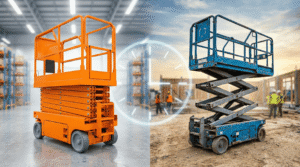
- Electric Scissor Lifts: Usually, these are single units which have a life span of 12–15 years. After all, they are used mostly in cleaner environments, indoors.
- Outdoor/Diesel: These age faster because of all the rough terrain and weather conditions they have to endure, so it is no wonder that they only have a peak life of 8–12 years.
- Operating Hours: Unlike cars that can measure every single second that they are off, many lifts can only measure the “movement hours.” In general, a single unit can take a load of 5,000 to 10,000 hours of actual working before it needs to be repaired or replaced substantially.
Factors That Influence Scissor Lift Longevity
The life expectancy of a scissor lift is hardly ever a fixed figure. It’s more like a variable that changes in line with how the machine gets abused, the kind of work it is involved in, and the frequency with which it is taken to the edge.
If you know these things, fleet managers can largely increase the time during which their aerial platforms will still be available for use.
- Frequency of Use: Naturally, a lift that is used constantly all through the day in a multi-shift warehouse will be older faster than one which only sees use for a few hours in a day at a facility for maintenance purposes.
- Operating Environment: Scissor lifts that work in temperature controlled indoor environments suffer less from corrosion and seal degradation as compared to those that are exposed to rain, salt, or extreme heat when operating outdoors.
- Load Management: Using the lift consistently at its full capacity can easily damage the hydraulic system and the scissors, over time causing the structure to get too weak.
| Factor | Impact on Lifespan | Estimated Years |
| Indoor/Electric | High Longevity (Clean Environment) | 15 – 20 Years |
| Outdoor/Diesel | Moderate (Exposure to Elements) | 10 – 15 Years |
| Heavy Construction | Low (Frequent High-Impact Use) | 7 – 10 Years |
Maintenance: The Key to Extending the Life Expectancy of a Scissor Lift
To achieve the maximum life expectancy of a scissor lift, there is simply no way to avoid maintenance. If a machine is being neglected, its lifespan will be just half of one that gets constant care and attention.
Through preventive maintenance, small problems such as hydraulic leaks or broken cables can be detected before they turn into major, costly repairs.
- Hydraulic System Care: Monitor fluid levels frequently and check for any cracks in hoses. This system is at the ‘heart’ of the lift, and oil is like its blood. Therefore, all components must work properly.
- Battery Maintenance: Ensuring charging procedures are correct and the terminals remain corrosion-free will help the battery life span grow from 3 years to over 5 years for electric models.
- Lubrication: If the pivot points and pins on the scissors get properly greased regularly, it will not only reduce friction but also prevent metal wear, which is the main cause of platform instability.
Comparing Brands and Build Quality
Not every lift has the same value. If you are looking into the life expectancy of a scissor lift, the brand and quality of the manufacturer will most certainly be a decisive factor. The leader brands tend to use high-strength steel and apply super durable coating methods (like electrophoresis) to prevent rusting.
- Premium Manufacturers: Some brands like JLG, Genie, and Skyjack are known to manufacture durable machines that retain their resale value for longer periods.
- Structural Integrity: You should always check for reinforced scissor arms and sturdy deck extensions, mainly because these parts generally fail first in cheaper models.
- Parts Availability: The service life of a machine is basically dependent on how quickly it can be repaired. Hence, brands with a wide range of spare parts will prevent the equipment from reaching its “end of life” just because one component is missing.
Signs Your Scissor Lift Is Reaching End-of-Life
It is of paramount importance to assess correctly when the life expectancy of a scissor lift has come to an end, mainly for safety reasons. Of course, you can always replace the batteries and tires, but sooner or later, the machine will have become so expensive to repair that it will make more sense to buy a new one.
- Structural Cracks: When the cracks, whether big or small, are visible on the welded joints or the scissor structure, it signifies that the metal has reached its endurance limit and can no longer be repaired safely in such a way that it will hold for long.
- Erratic Movement: If the lift movements are not smooth but jerk up and down, especially if it has been recently topped up with hydraulic fluid, the problem is internal and can possibly be the cylinder or valves; however, it is unlikely to be fixed with a simple replacement of parts.
- Obsolete Safety Tech: Sometimes, old machines might miss out on such safety features as tilt sensors or anti-crush technology, which are becoming more of the norm these days; thus, giving such lifts an unsafe edge in modern work environments or job sites.
Maximizing ROI Through Proper Storage
The place where the life expectancy of a scissor lift is recharged or replenished so to speak, is during its downtime. The environment to which tractor-mounted machinery is exposed, in general, is a significant contributor to the lesser lifespan of such equipment.
- Dry Storage: The benefits of keeping the scissor lift under shelter, dry, and well-ventilated are the prevention of the chassis from rusting and water from entering the electrical control box.
- Tire Protection: It is a known fact that parking a rough terrain lift outside on ground that is uneven, soft, or loose will result in tires getting flat spots and the drive motors being subjected to extra load. Hence, this way of causing damage should be avoided at all costs.
- Climate Control: Hydraulic seals might crack if totally frozen, and electric components can start to degrade under excessive heat. Thus, storing the lift indoors can help avoid these issues.
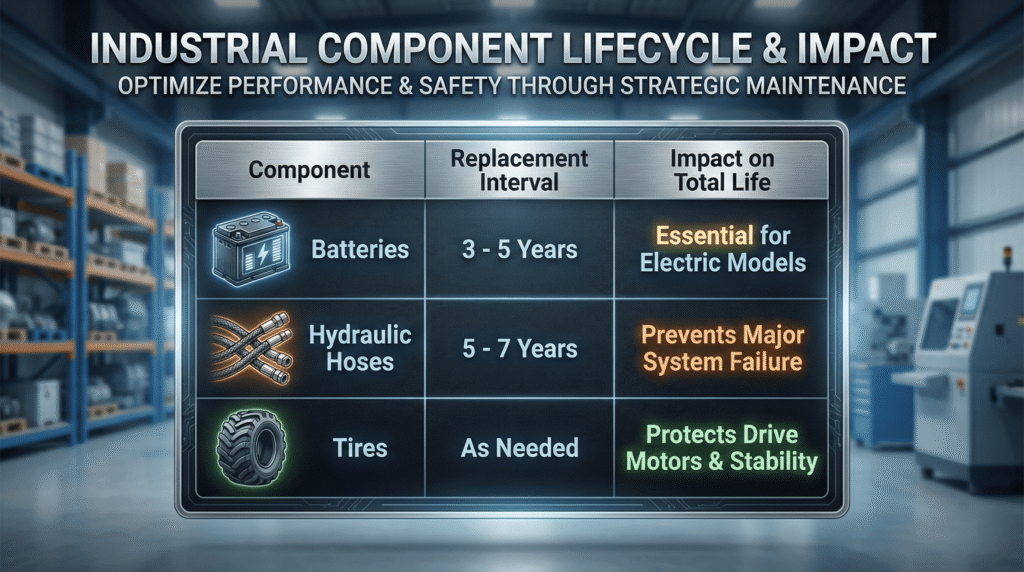
| Component | Replacement Interval | Impact on Total Life |
| Batteries | 3 – 5 Years | Essential for Electric Models |
| Hydraulic Hoses | 5 – 7 Years | Prevents Major System Failure |
| Tires | As Needed | Protects Drive Motors & Stability |
Conclusion: Investing in the Future of Your Fleet – Life Expectancy Of A Scissor Lift
It is ultimately the life expectancy of a scissor lift that reveals the extent of care provided to the machine. If you buy the right top-quality equipment, stick to a thorough maintenance regime, and train your operators to be mindful of the machine’s limitations, then without a doubt, your lift will continue to be a reliable, safe, and productive work companion for years to come. Regardless of whether your lift operates on a smooth electric slab or rough diesel terrain, it is the same goal that you have: best possible output and longest service life.
FAQs on Life Expectancy Of A Scissor Lift
How many hours is a lot for a scissor lift?
That depends on the context, but in general, a scissor lift going over 2,500 to 3,000 hours is not considered “lightly used.” However, it is at the 5,000-hour mark that the lift truly enters the big-usage category, where some major parts (hydraulic pumps, drive motors) are bound to wear out and, hence, get replaced.
Can a scissor lift last 30 years?
Of course it can, especially if it is an electric or hydraulic indoor lift that gets used intermittently. If you take great care of it, change its parts regularly (batteries, seals, tires), then even those top-notch machines from the 90s are still at work in the 21st century.
What is the most common reason for scissor lift failure?
The top two reasons for downtime and failure are battery neglectes in electric lifts and hydraulic contamination in diesel lifts. Once hydraulic filters are not changed, debris starts to wreak havoc on all lift systems.
Is it better to buy a new or used scissor lift?
Should the duration be more than 50% of your workdays, then buying new is the way to go because, besides the full life expectancy of a scissor lift, you also get a warranty. That said, a well-cared-for used lift with a low number of hours may be a great investment for a small-sized company.
How often should a scissor lift be inspected?
OSHA and ANSI are in agreement that there should be formal, “frequent inspections” coming at intervals of every 90 days or 150 hours (whichever occurs first) followed by a more thorough, “annual inspection” taking place every 13 months to guarantee that the working equipment is fit for use.
Do electric scissor lifts last longer than diesel ones?
Generally speaking, yes. The reason being electric lifts run mainly indoors on clean, smooth floors while diesel rough terrain lifts get exposed to mud, dust, and vibrations, all of which speed up wear and tear mechanically.
How much does it cost to refurbish an old scissor lift?
The total cost of a refurbishment (new batteries, new hoses, new paint, and new seals) can be from $2,000 to $5,000. This kind of investment is usually warranted if the basic structure of the lift is still strong.