Can You Move a Scissor Lift While Elevated?
The question of whether can you move a scissor lift while elevated is one of the most critical safety inquiries in the construction and maintenance industries. While the short answer is “it depends on the model,” the reality is governed by a complex set of OSHA regulations and manufacturer specifications.
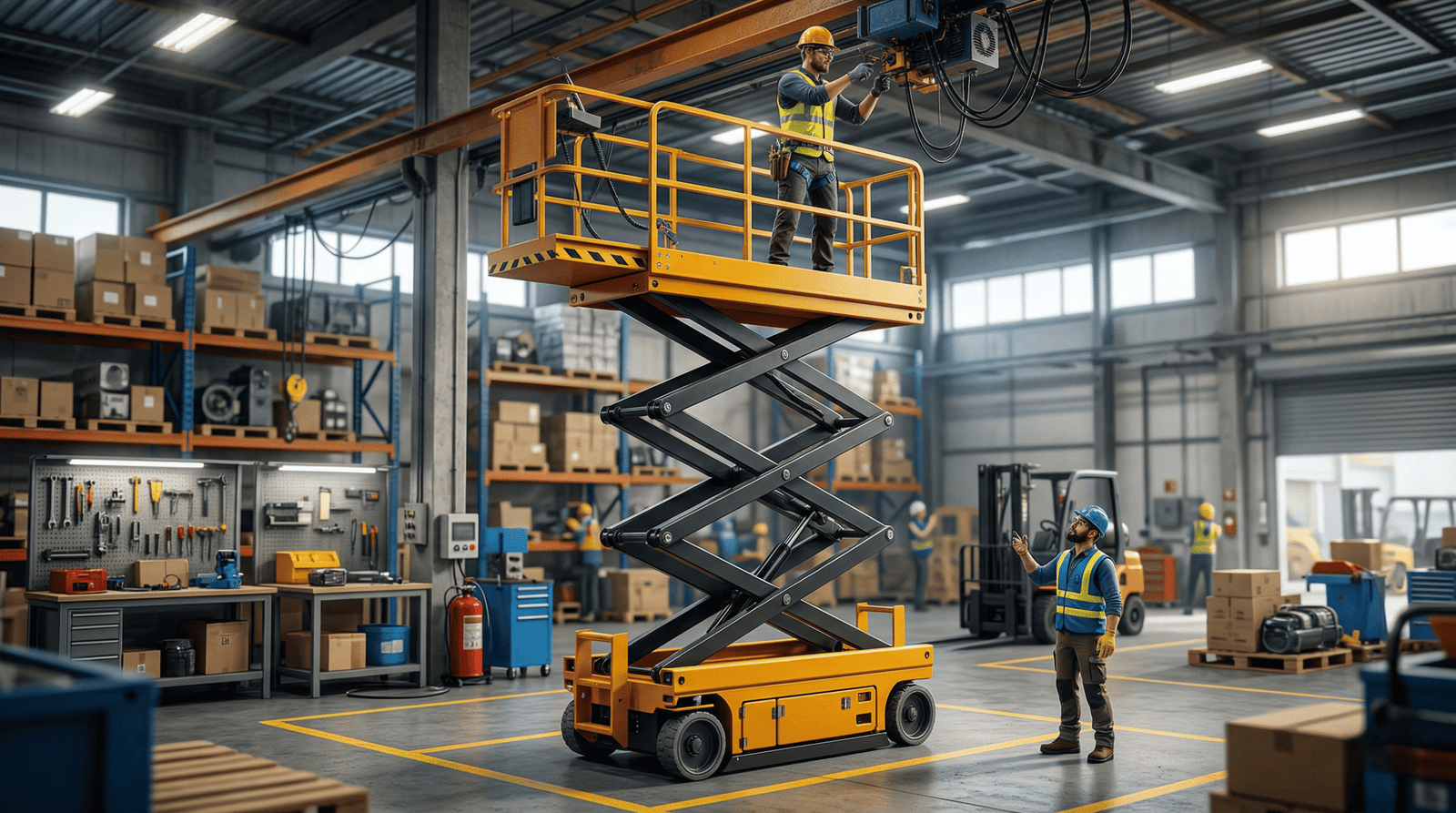
When you operate a scissor lift at a height, the center of gravity moves a lot, which makes the machine more likely to tip over if the ground isn’t perfectly level or if the movement is too sudden.
The first step in figuring out if you can safely move a scissor lift while it is elevated is to know the difference between the different kinds of lifts. Many self-propelled units come with “pothole protection” and tilt sensors that let them move at “creep” speed while they are raised.
On the other hand, push-around or manually propelled lifts are not allowed to move while the platform is extended. If you don’t follow these rules, you could not only damage your equipment, but you could also die.
Learning about the different kinds of equipment
Before you try to move your machine, you should know if it can move while it is extended. The way the base of a lift is made affects how stable it is. Different lifts are made in different ways.
- Self-Propelled Scissor Lifts: These have internal drive motors (either electric or diesel) and are often rated by manufacturers to move at a very slow “turtle” speed while the platform is partially or fully raised.
- Push-Around Scissor Lifts: The wheels on these lifts don’t have a motor to move them. You have to push them into place with your hands. Don’t move these while a worker is on a high platform.
- Units for rough terrain: These are made to be used outside and have wider bases and stronger stability systems. They do, however, have strict limits on how high the drive can go that must never be broken.
OSHA and ANSI Rules and Regulations
OSHA and ANSI are two regulatory groups that have strict rules about whether or not you can move a scissor lift while it is up. The goal of these rules is to make it less likely that people will fall, tip over, or get electrocuted.
- Manufacturer Supremacy: OSHA 1926.452(w) says that the manufacturer’s instructions are the law. If the manual says “do not move while elevated,” then any movement is a direct safety violation.
- Surface Requirements: A lift can only go up if it is on a firm, level surface, even if it is rated for going up. Even a few degrees of slope can make something tip over if its center of gravity is high.
- Training Requirements: Only “qualified people” who have received specific training on that exact model are allowed to drive a lift while the platform is up.
Critical Safety Risks and Hazards
You need to think about how well the job will get done and how dangerous it will be when you ask if you can move a scissor lift while it is up. A small bump on the floor of a warehouse can make things sway a lot 30 feet in the air.
- Accidents when the machine tips over: The machine gets top-heavy as the platform rises. If you drive over a small zip tie, a crack in the concrete, or a slight slope, the base may lose its footprint.
- Crushing and Pinning: When the operator is moving while elevated, their view is limited. You can easily get stuck between the guardrail and a door frame or beam above you.
- Risks of electrocution: Moving a raised lift puts the operator closer to power lines above them. To avoid electrical arcing, there must always be at least 10 feet (3 meters) of space between objects.
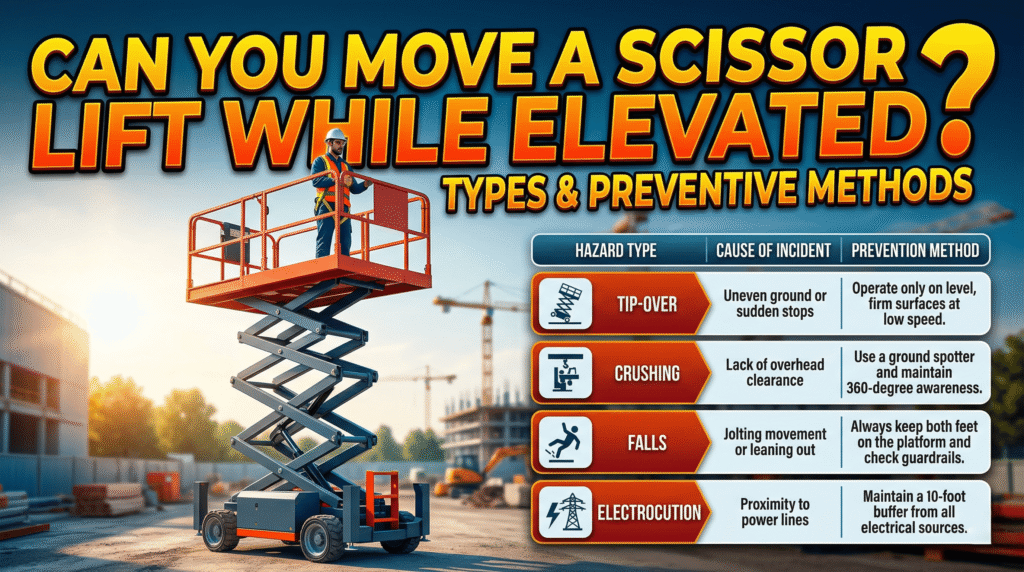
Table: can you move a Scissor Lift While Elevated – Types and Preventive Methods
| Hazard Type | Cause of Incident | Prevention Method |
| Tip-Over | Uneven ground or sudden stops | Operate only on level, firm surfaces at low speed. |
| Crushing | Lack of overhead clearance | Use a ground spotter and maintain 360-degree awareness. |
| Falls | Jolting movement or leaning out | Always keep both feet on the platform and check guardrails. |
| Electrocution | Proximity to power lines | Maintain a 10-foot buffer from all electrical sources. |
Best Practices for Scissor Lift while Elevated Movement
If your equipment and manufacturer let you, there is no question that you should follow a “safety-first” checklist. Never put an operator’s life in danger for the sake of getting things done faster.
- Check the “Turtle” Mode: Make sure to check the high-speed lockout is working. Most scissor lifts will slow down their drive speed on their own once the platform rises above a certain level.
- Clear the Path: Before moving the scissor lift, the operator or a “spotter” on the ground should make sure that there are no holes, debris, or other workers in the way.
- Keep the guardrail strong: Don’t use planks, ladders, or crates to get to higher height while the scissor lift is moving. Keep both feet firmly on the floor of the platform.
Frequently Asked Questions (FAQs) – Can You Move a Scissor Lift While Elevated?
Can you legally drive a scissor lift while it is up?
Yes, it is legal if the operator’s manual from the manufacturer says so and the surface is level and firm. But OSHA says you have to follow all the speed and height limits set by the manufacturer.
What is the highest wind speed that a raised scissor lift can handle?
Most scissor lifts that can be used outside can only handle winds of up to 28 mph (45 km/h). If the winds get stronger than this, the lift must be lowered right away to stop it from tipping over.
If I’m moving a scissor lift, do I need a harness?
OSHA says that guardrails are the main way to keep people from falling off of scissor lifts. But a lot of employers and certain worksites (and ANSI A92.20 standards) require a harness and lanyard as an extra safety measure.
Is it possible for a scissor lift to fall over on a flat surface?
Yes. If the lift is moved too quickly, stopped suddenly, or hits a small object like a tool or a hole in the floor, the momentum can make it tip over, especially when it is fully extended.
What should I do if the alarm goes off?
Stop moving right away if the tilt alarm goes off. Don’t try to lift the platform any higher. Carefully lower the platform all the way down and move the base to a place that is more level.
Is it possible to move a manual scissor lift while it is up?
No. You have to fully lower a push-around scissor lift before you can move it to a new place. It is very dangerous to move them while they are raised.
How often should you check a scissor lift?
Before each shift, the operator must do a visual and functional check of the equipment. ANSI standards also say that a qualified mechanic must check the vehicle once a year.