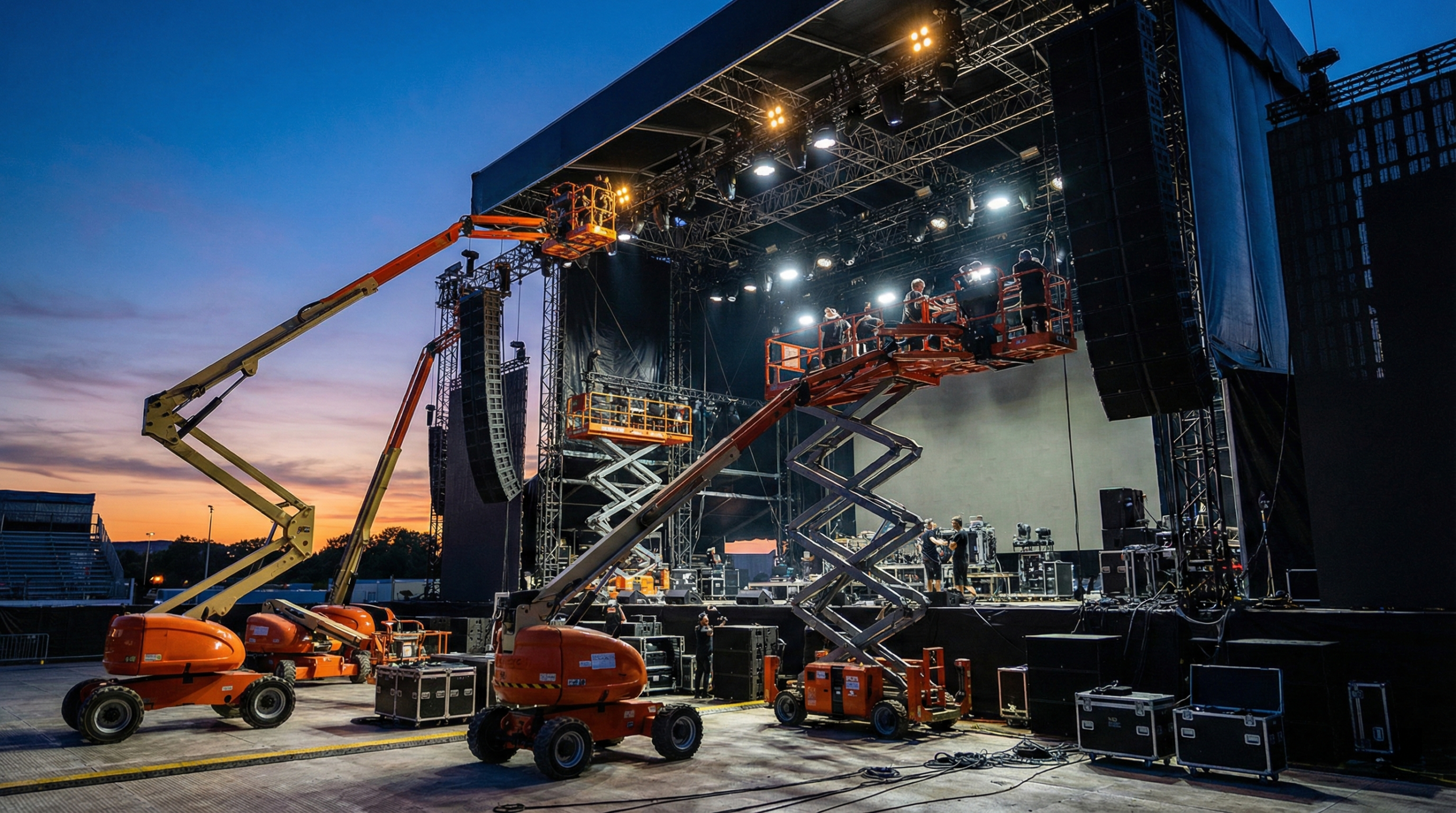
The Role of Aerial Lifts in Professional Event Management
Precision and efficiency are the first and foremost requirements of the professional event management industry which operates at very high speed and has considerable stakes. The success of an event experience actually depends more on the logistics that are done behind the scenes than on anything else. These aerial lifts varying scales could be a large music festival, corporate exhibition, or a small exclusive party.
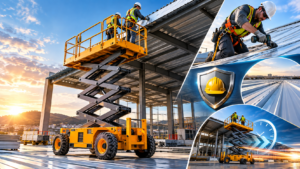
Among the many equipments that event planners and production teams use, aerial lifts have indeed started to become very indispensable items. Such lifts are powerful vehicles and come in different varieties. For instance, the versatile scissor lifts or the lofty boom lifts. They provide the vertical access essential for turning empty areas into visually stunning ones.
Such lifts are the silent production partners who enable the teams to safely and quickly perform tasks such as hanging sophisticated lighting fixtures, suspending huge LED screens, and decorating high ceilings in ways that traditional ladders could never accomplish.
Importance of Aerial Lifts in Event Management:
Aerial lift is among the exceptional equipment that event planners can use which not only help to effectively meet tight production deadlines but also in the most compliant way with the set safety regulations. As the productions continue to be more and more lavish featuring higher quality and more complicated audiovisual stages, the demand for reliable elevation equipment has gone up significantly.
Today, event managers resort to a wide range of specialized lifts to be able to work efficiently and neatly around the different spatial limitations of various venues, whether it is the polished floors of the indoor ballrooms or the rough terrain of an outdoor festival area.
Optimizing Event Setup with Unmatched Efficiency
Time, typically, is the most valuable resource in event management. Load-in and load-out phases have extremely strict time limits, so if there is a delay in either activity, it will cause a ripple effect on the whole schedule.
Setting up with the help of aerial lifts will save a lot of time, as they can provide a stable, movable platform that can accommodate not only personnel but also heavy equipment to the required height. Unlike ladders which are limited both in the height they can reach and being stable, or scaffolding that has to be built up and dismantled which is very time-consuming, aerial lifts can be used immediately after the arrival at the site.
Therefore, the productivity of such devices results in the event team being able to put more of their energy into the creativity aspect of the event rather than to be bothered with the shipment problems.
- Rapid Deployment: Aerial lifts can be driven into position and elevated in seconds, allowing technicians to move quickly between task locations without dismantling equipment.
- Heavy Lifting Capabilities: These machines are designed to not only lift workers but also heavy tools, lighting fixtures, and rigging materials, which helps to minimize the physical exertion of the crew and accelerate the installation process.
- Simultaneous Multi-Level Work: Using several lifts, different teams can work at multiple heights at the same time, so lighting, sound, and decoration crews can all proceed in parallel without hindering each other’s progress.
Safety Foremost, At Every Level
In the event industry where concerns about liabilities and the physical and mental health of employees are really serious, safety must come first. One of the biggest dangers when working at height is falling, while another, related risk is the use of unstable equipment.
Aerial lifts, on the other hand, have been designed with sophisticated safety features aimed at lessening the residual risks. Therefore, they have become the radically different alternative to shack and home-made ladder systems that people were traditionally resorting to.
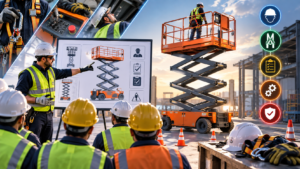
Experiencing situations where the team is operators of huge machinery who have been sufficiently trained and are not risking their lives when they work at height is something that even a professional event manager is conscious of not only for the purpose of the company only but also as a real human consideration for their team as their most prized possessions.
Advanced models are equipped with stability sensors, guardrails, and emergency descent systems, thus ensuring a safe working environment even at considerable heights.
- Stable Working Platforms: Unlike ladders, which can wobble, aerial lifts provide a wide, flat, and railed platform that allows technicians to use both hands freely for delicate tasks like wiring or focusing lights.
- Fall Protection Integration: All professional-grade aerial lifts feature dedicated anchor points for safety harnesses, thus operators are ensured of being fully secured against accidental falls.
- Built-in Safety Systems: Advanced models include tilt alarms, overload protection, and pothole guards (for slab scissors) which automatically shuts down the device if an unsafe condition is detected; thereby, significantly lessening the probability of human error.
Flexibility in a Range of Site Environments
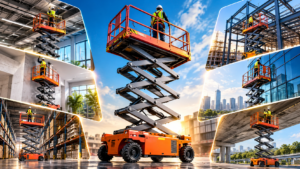
There is an endless number of event types and the venue choices planned by event planners vary from places such as historic theaters with vulnerable floors to green parks with wild ground. Responding to the wide spectrum of needs, aerial lift manufacturers have come up with a range of vehicle models tailored to different environments.
For example, for indoor events, electric scissor lifts are the first choice because of their quiet operation, zero emissions, and non-marking wheels that help preserve costly ballroom floors.
As a contrast, festival concerts held in the open air will demand heavy-duty, diesel-powered boom lifts with four-wheel drive to move the lifted machine over mud and grass. What this versatility means is that regardless of the nature of the event and its location, there will be a drone lift solution that matches the specific requirements of the site.
- Indoor Precision: Electric models operate silently and without exhaust fumes, making them perfect for indoor use during rehearsals or even during events without disturbing guests.
- Rough Terrain Adaptability: Outdoor lifts come fitted with heavy-duty tires and top-notch suspension to be able to keep their balance on uneven ground, gravel, or turf.
- Compact Designs for Tight Spaces: Vertical mast lifts and narrow scissor lifts are made to be small enough to fit through normal-sized doors and to be able to move around cramped backstage areas, providing access to hard-to-reach corners without interfering with the rest of the setup.
Enhancing Visuals and Media Coverage
Aerial lifts are also often involved in the show aspect of the event and this is mostly the case when it comes to media coverage and visual effects. Videographers need to get elevated shots which tripod-mounted cameras are incapable of doing, and this happens consistently in concerts or other large production shows.
They would therefore use scissor and boom lifts as stable camera platforms to shoot concert stages or crowds from a “sky view” that is not possible otherwise. Additionally, these types of aerial lifts can be used to deploy a variety of lighting effects or other special effects such as confetti cannons or fog machines from above. This dual-purpose use makes them a creative tool as much as a logistical one.
- Dynamic Camera Angles: Live cameras and photographers are given an exclusive “bird’s-eye view” of the event that they are covering. This allows them to capture the vastness of the crowd as well as the stunning beauty of the stage design.
- Special Effects Deployment: Technicians can remain stationed on lifts during the show to operate follow-spots, drop balloons, or manage other overhead effects that require manual timing.
- Adjustable Lighting focus: Lighting designers can make use of lifts during rehearsals to make very small changes to the positions and focus of fixtures so that by the time the main event is staged, the setting is simply perfect.

Comparing Aerial Lift Types for Events
Choosing the right machinery is clearly an important decision for event producers to make. As such, knowing what specific features the different aerial lift classes offer is the least one can do to be sure of their choice.
You will find below a comparison between the different variants of lifts in the industry, together with the uses for each of them that have been identified as the most appropriate.
Table: Aerial Lifts in Professional Event Management
| Lift Type | Primary Mechanism | Ideal Venue | Key Event Applications |
| Electric Scissor Lift | Vertical extension via crisscross mechanism | Indoor (Ballrooms, Convention Centers) | Hanging banners, ceiling decor, lighting setup, HVAC access. |
| Rough Terrain Scissor Lift | Vertical extension with rugged tires/engine | Outdoor (Festivals, Concerts) | Stage construction, outdoor rigging, heavy load lifting on grass/dirt. |
| Articulating Boom Lift | Jointed arm for “up and over” reach | Indoor/Outdoor (Complex structures) | Reaching over obstacles like seating or stages to focus lights or hang speakers. |
| Telescopic Boom Lift | Straight arm for maximum horizontal reach | Outdoor (Stadiums, Large arenas) | High-elevation tasks, stadium lighting, accessing trusses from a distance. |
| Vertical Mast Lift | Vertical mast with compact footprint | Tight Indoor Spaces | Navigating narrow aisles, changing light bulbs, light maintenance in lobbies. |
The Importance of Maintenance and Certification
One of the most important things that will ensure an event runs without a hitch is the reliability of the equipment. Mistakes with timing due to equipment breakdowns can not only cause a lot of chaos with the setup but can eventually even lead to shutting down the whole event.
This is exactly why the importance of sticking to a thorough maintenance schedule and simultaneously ensuring the operators’ certification can hardly be overstated. For instance, a regularly serviced scissor lift will, apart from complying with safety regulations, also work more effectively and have a longer life, thus bringing the benefits of less downtime and lower repair costs.
As the representative of ScissorLifts.org pointed out human visitors, the most important maintenance elements of any machine are the checks of the hydraulic system, battery load, and even the safety bars. Besides this, all operators must receive training that meets OSHA standards.
Besides law compliance, this kind of procedure equips the workers with the confidence and capability to operate heavy-duty items of machinery safely and efficiently in a setting of an event which is usually quite unpredictable and chaotic.
- Pre-Event Inspections: Make an in-depth visual inspection of the lift by walking around it before you start working with it to make sure that there are no leaks, tire damages, and control malfunctions.
- Battery Maintenance: With electric lifts, it is more than necessary to make sure that batteries are not only full of charge but also watered properly so that the machine doesn’t break down in the middle of the setup.
- Operator Certification: To operate the lifts, only trained operators must be used; this helps in minimizing the risk of accidents and also in ensuring that the machinery is utilized optimally without any damage.
FAQs: Aerial Lifts for Event Management
Is an operator license required when using a scissor lift for an event?
It is a fact that OSHA mandates operators of all types of aerial lifts, scissor lifts inclusive, to be trained and authorized. Whereas the actual driver’s license is not issued per se, the employer is obligated to facilitate training that conforms to both OSHA and ANSI criteria and to assess the operator on the individual piece of equipment which they will utilize.
What type of aerial lift is the most suitable for indoor wedding venues?
An electric scissor lift and a vertical mast lift are the most suitable options for indoor wedding venues. These units operate quietly, and since they produce no emissions, the air quality is preserved too. Besides, most of these machines come fitted with non-marking tires, hence they won’t scratch delicate flooring, such as hardwood or tile.
What is the approximate scissor lift rental cost for a weekend event?
The rental price depends on the location and the size of the lift but generally, a standard 19-foot electric scissor lift can run between $100 and $150 per day or $300 to $500 per week. Usually, delivery and pickup charges are not included.
Is it possible to use scissor lifts on ramps or sloped floors?
Most typical scissor lifts are intended for operation on surfaces that are flat and level only. Nevertheless, Rough Terrain Scissor Lifts come with outriggers (stabilizers) that allow the device to be leveled even on uneven ground. Before driving on a slope, always refer to the manufacturer’s specifications for gradeability.
What distinguishes a boom lift from a scissor lift?
A Scissor Lift only moves vertically and offers a wider platform for the workers and their tools. A Boom Lift (cherry picker) has an arm that can extend vertically and horizontally. Hence, it can be used to reach over obstacles and access difficult spots, which a scissor lift is not capable of doing.
What safety equipment is mandatory when operating aerial lifts?
By OSHA rules, the boom lift operators must wear a full-body harness, which is connected via a lanyard to the basket’s anchor point. The harness use is not always mandated at the federal level for scissor lifts (it depends on the jurisdiction and the use of guardrails), but many venue owners and employers implement a policy requiring harnesses for all aerial lifts to be followed so that the highest possible safety standard is achieved.
What is the height range for aerial lifts used in stadium events?
Normally, scissor lifts are designed to go up to a height between 19 and 50 feet. By the way, in the cases of stadium events that need even higher elevations, Telescopic Boom Lifts are used, which can operate at heights ranging from 120 feet up to over 180 feet. This enables them to be able to reach the highest stadium lights and rafters.
Strategic Decision – Professional Event Management
One cannot exaggerate the significance of aerial lifts in the professional event management industry. They are the provider of elevation, safety, and efficiency needed to carry out complex visions from the first load-in to the last curtain call.
Knowing the different aerial lift types such as a versatile Aerial lifts work platform for event management and strictly observing safety and maintenance measures, event organizers can take their productions to levels of success that are higher than ever.
Be it a scissor lift during wedding decoration or a boom lift to set up a festival stage, the perfect gear is the hallmark of a safe and theatrical event.