

- Scissor Lift Battery Maintenance: How to Make Your Equipment Last Longer?
- Why is it important to take care of the batteries in a scissor lift?
- The Best Ways to Charge Your Scissor Lift
- Watering: An Important Part of Electrolyte Management
- Seasonal Care: Keeping Scissor Lift Battery Safe from Extreme Temperatures
- Fixing Common Scissor Lift Battery Problems
- FAQs About Scissor Lift Battery Maintenance
- Conclusion: Invest into the future of your Scissor Lift Battery Maintenance
Scissor Lift Battery Maintenance: How to Make Your Equipment Last Longer?
The best way to keep your aerial work platform running and lower long-term operating costs is to take care of its power source. People often say that the batteries in a scissor lift are the “heart” of the machine. If they fail, the whole workflow stops. Taking care of your scissor lift battery maintenance properly is more than just a suggestion; it’s a technical requirement that can make your equipment last from 12 months to more than 5 years.
This detailed guide goes over the most important things you need to do to keep your electric scissor lifts running at their best. It focuses on charging procedures, managing fluids, and protecting the environment.
Why is it important to take care of the batteries in a scissor lift?
The battery bank’s health has a direct effect on how well an electric scissor lift works. Most standard models use deep-cycle lead-acid batteries, which work by having lead plates react with an electrolyte solution made of sulfuric acid and water. This chemical process can become less effective over time without regular help, which can cause permanent damage.
- Cost Efficiency: It can cost thousands of dollars to replace a full set of deep-cycle batteries. Regular maintenance puts off this cost for a long time.
- Operational Reliability: When batteries are well-maintained, they can run for 6 to 8 hours straight, making sure that a full shift of work can be done without any problems in the middle of the day.
- Safety Standards: Corroded terminals or leaking cells can cause electrical shocks or chemical burns, so keeping things in good shape is an important part of keeping the workplace safe.
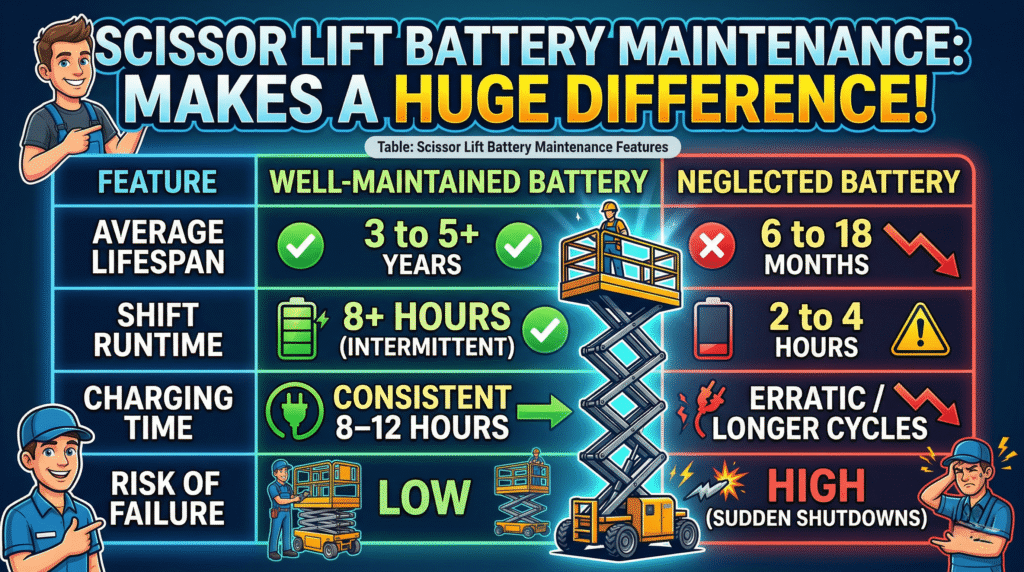
Table: Scissor Lift Battery Maintenance Features
| Feature | Well-Maintained Battery | Neglected Battery |
| Average Lifespan | 3 to 5+ Years | 6 to 18 Months |
| Shift Runtime | 8+ Hours (Intermittent) | 2 to 4 Hours |
| Charging Time | Consistent 8–12 Hours | Erratic/Longer Cycles |
| Risk of Failure | Low | High (Sudden Shutdowns) |
The Best Ways to Charge Your Scissor Lift
Most battery damage happens when they are charging. Many operators believe in “opportunity charging,” which means plugging the machine in during a 30-minute lunch break.
However, this can actually shorten the life of lead-acid batteries by making them hotter and counting cycles too soon. To keep the Scissor Lift Battery in good shape, you need to set up a strict charging schedule.
- Finish the Cycle: Before disconnecting, make sure the battery is fully charged. Modern smart chargers have three steps (Bulk, Absorption, and Finish) that help desulfate the plates.
- Avoid Deep Discharge: Don’t let your battery level drop below 20% to avoid deep discharge. When you discharge a battery to “dead,” it causes “deep sulfation,” which hardens on the lead plates and makes the battery less powerful for good.
- Ventilation is important: When lead-acid batteries are almost full, they let out hydrogen gas. Always charge in a place with good air flow to keep flammable gases from building up.
Watering: An Important Part of Electrolyte Management
In your Scissor Lift Battery Maintenance routine, the water level is the most important physical check for flooded lead-acid batteries. The water in the electrolyte solution evaporates as the batteries charge. If the fluid level gets too low, the lead plates are exposed to air, which causes them to oxidize quickly and fail.
- Avoid Deep Discharge: Never use tap water. Minerals in tap water, such as calcium and magnesium, stick to the battery plates and stop the chemical reaction, which causes the battery to discharge on its own.
- Water After Charging: Always add more water after the battery has been fully charged. When you charge a battery, the electrolyte levels rise. If you fill the cells ahead of time, the battery could boil over and leak dangerous acid.
- Inspections once a week: Check the levels of fluids at least once a week. The water should be about 1/8 to 1/4 inch above the lead plates and below the bottom of the fill well.
Preventing corrosion and cleaning
Corrosion makes the battery work harder to push current through the wires by acting as a resistor. This makes heat and uses up power that should be going to the motor that moves the lift. A battery that is clean is a healthy battery.
- Get rid of the acid: Clean the tops of the batteries with a mix of water and baking soda. This neutralizes any “acid mist” that has settled on the casing, which can cause “tracking” (slow power leaks).
- Terminal Protection: Make sure all of the connections are tight. Put a thin layer of petroleum jelly or a special terminal protector spray on the terminals after cleaning them to keep them from oxidizing again.
- Getting rid of trash: Keep the battery tray clean of dirt and gravel. Debris can hold moisture against the terminals, which speeds up rust and corrosion on the battery hold-downs.
Seasonal Care: Keeping Scissor Lift Battery Safe from Extreme Temperatures
The chemistry of batteries is very affected by temperature. Chemical reactions happen more slowly in the winter, which makes the battery less “punchy.” High heat speeds up internal corrosion and water evaporation in the summer.
- Winter Storage: A battery that has been used up can freeze at temperatures just below 32°F (0°C). When it’s cold outside, always keep your scissor lift fully charged. This will lower the freezing point of the electrolyte.
- Checks on summer fluids: Check your water levels twice as often during heat waves. Batteries can “gas” more often when the temperature is high, which makes them lose fluid quickly.
- Warm Up Before Use: If you can, move a cold scissor lift to a warmer place for an hour before you start lifting something heavy. This will “wake up” the battery chemistry.
Fixing Common Scissor Lift Battery Problems
Problems can still happen, even with the best Scissor Lift Battery Maintenance. You can step in before a full system failure happens if you know the warning signs.
- Slow Performance: If the lift moves slowly or the motor makes a “whining” sound more than usual, it probably means that the cells are weak or the connections are bad, which is causing a drop in voltage.
- The “Clicking” Sound: If you hear a quick clicking sound when you try to drive or lift, it usually means the battery has enough voltage to turn on the solenoid but not enough amperage to turn on the motor.
- Physical Deformation: If the battery casing looks “bloated” or swollen, it has been overcharged or exposed to very high temperatures. You need to get rid of these batteries right away because they are dangerous.
FAQs About Scissor Lift Battery Maintenance
How long do batteries for scissor lifts usually last?
A good set of deep-cycle batteries will last between 3 and 5 years if you take care of them properly. They could break down in just 6 to 12 months if they aren’t taken care of.
Is it possible to use a regular car battery in my scissor lift?
No. Scissor lifts need “deep-cycle” batteries that are made to last a long time and discharge steadily. Car batteries are “starting” batteries that give a quick burst of energy. If you use them in a lift, they will fail quickly.
Is it okay to charge a scissor lift overnight?
Yes, it’s actually a good idea. Most modern scissor lifts have smart chargers that stop charging the battery when it is full and switch to “float” or “maintenance” mode.
Why won’t my scissor lift battery stay charged?
This happens a lot when lead sulfate crystals harden on the plates because the battery was left in a dead state. It can also happen because of low fluid levels or getting older.
How often do I need to put water in the batteries of my scissor lift?
You should check the levels of water every week. You might need to add distilled water every two to four weeks, depending on how often you use it and the weather. Always look after a full charge.
Is it possible to jump-start a scissor lift with a truck?
It is possible to do this in an emergency, but it is not a good idea because it could damage the lift’s sensitive electronic control system. Using a commercial charger made just for this purpose is the best way to bring the batteries back to life.
How can I tell if the battery in my scissor lift is bad?
A battery that is going bad may have shorter run times (the lift stops working after 1–2 hours), slower lifting speeds, visible corrosion that won’t go away, or a “rotten egg” smell (sulfur) when it is charging.
Conclusion: Invest into the future of your Scissor Lift Battery Maintenance
It is not luck that your aerial equipment lasts a long time; it is the result of regular, proactive care. You can turn Scissor Lift Battery Maintenance from a chore into a way to save money by following a strict charging schedule, making sure the fluid levels are right, and keeping the terminals clean. Keep in mind that a few minutes of inspection each week can save you days of downtime and thousands of dollars in replacement costs. Your scissor lift will keep going higher and higher for years to come if you keep the batteries charged and clean.
Discussion
0 comments